
About HandheldPrinter Inks
HandheldPrinter Inks supports South African businesses that need dependable coding cartridges for handheld inkjet coders. From our Pinetown base, we help match ink to the surface, the job and the way your line runs.
What our team handles each day
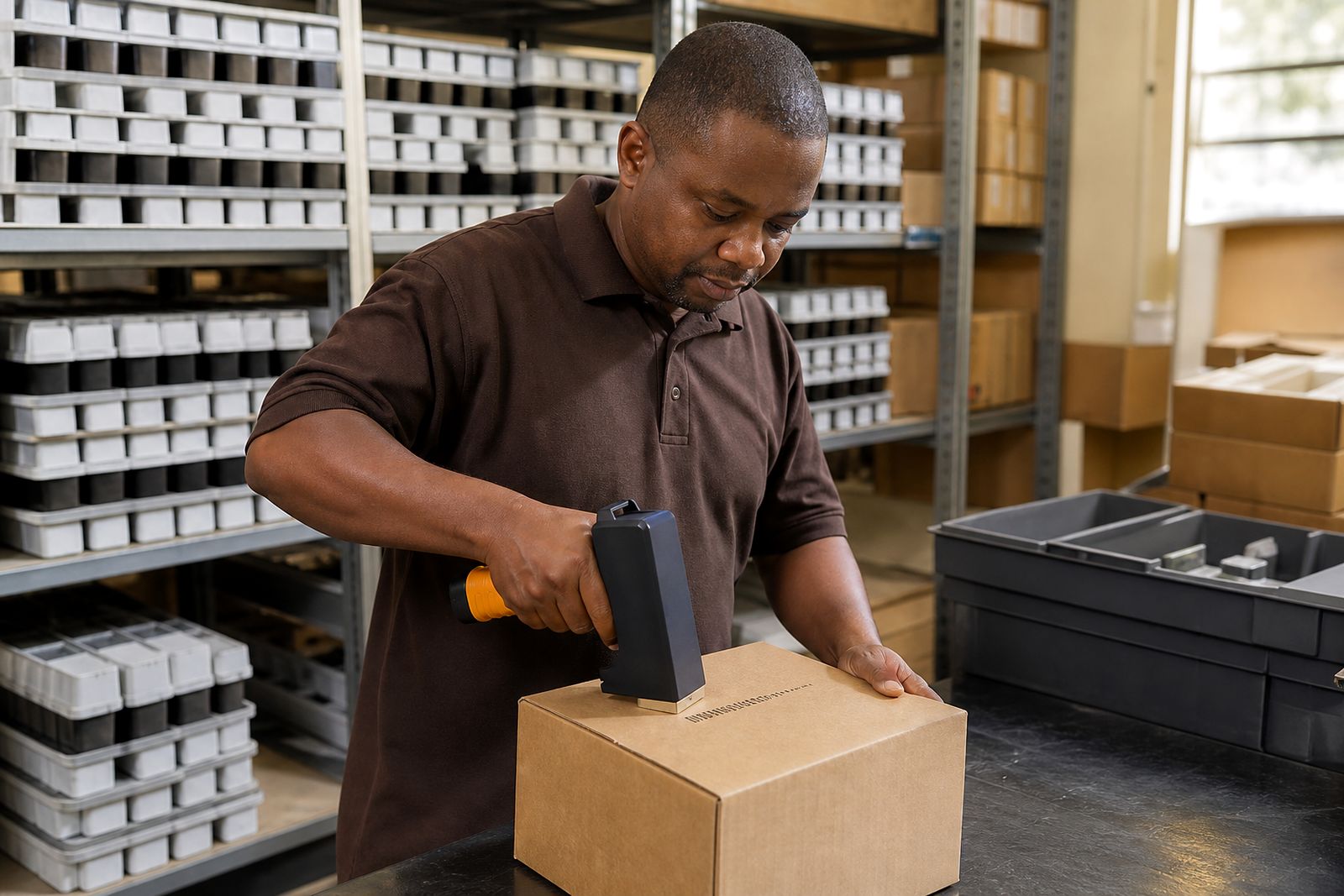
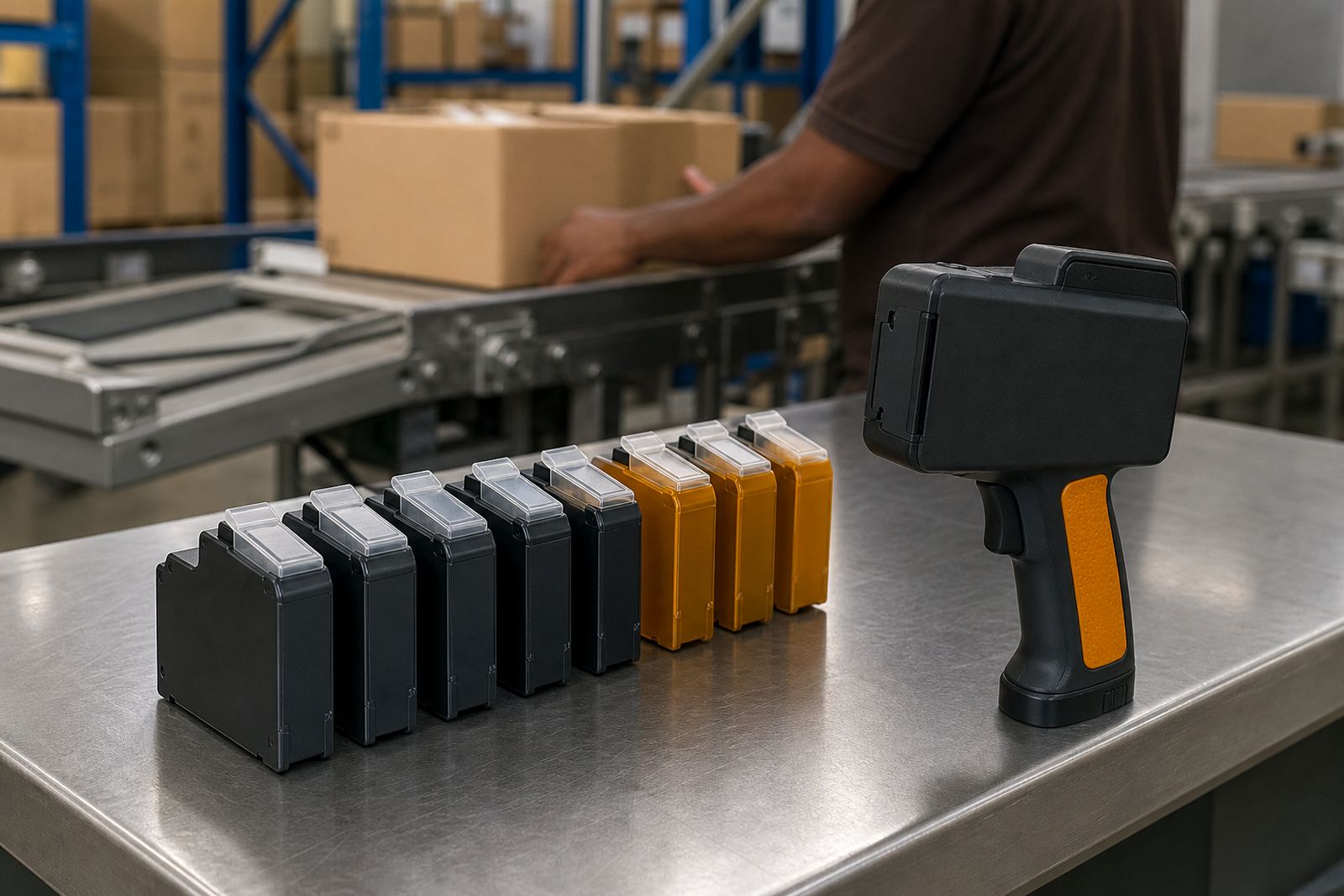
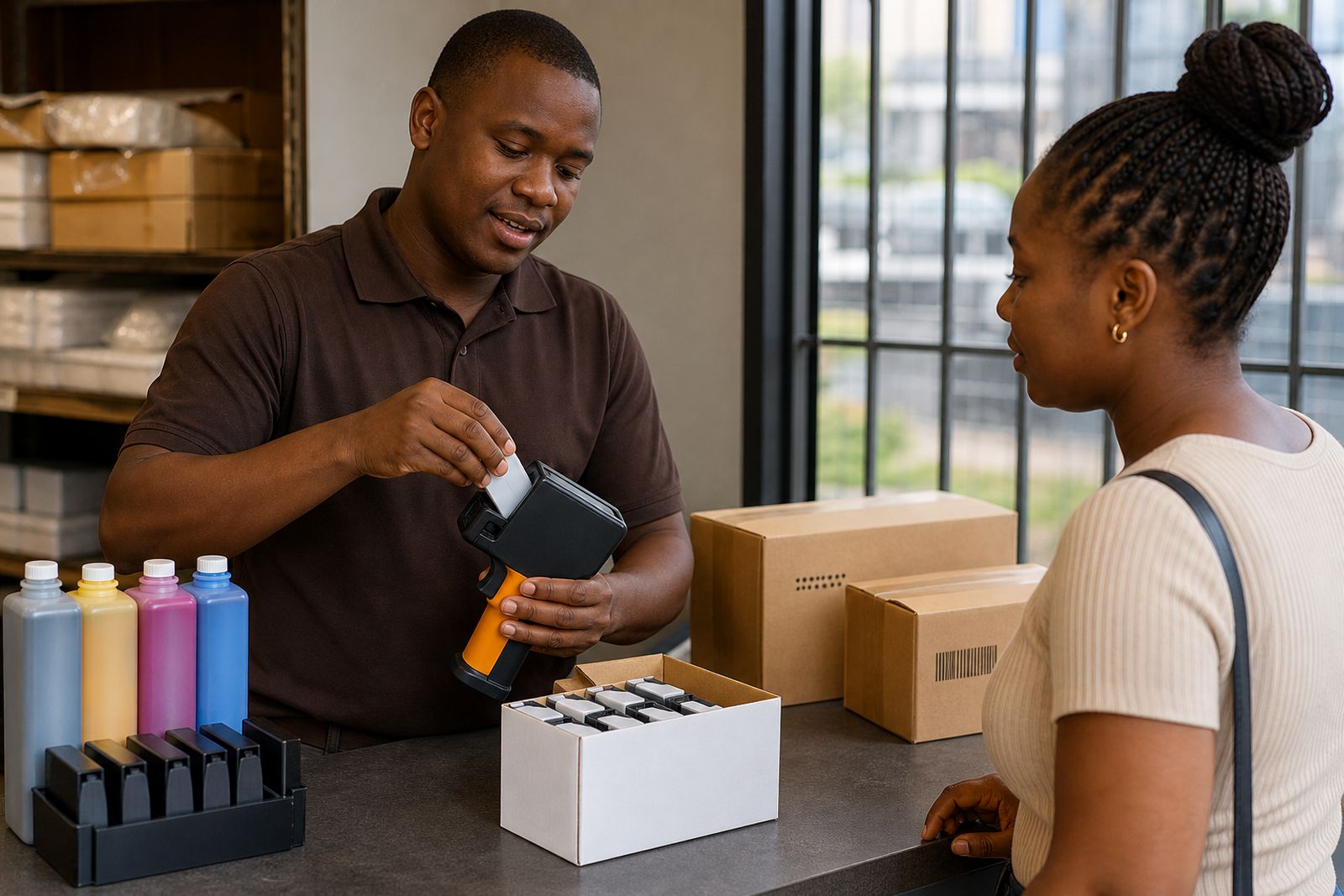
Our work centres on inks and cartridges for handheld inkjet coders used in packing rooms, warehouses, dispatch areas and production floors. We do not sell the coders themselves and we do not repair them, but we do help customers choose cartridges that suit the machine they already use and the material they need to mark. That includes clear black codes on cartons, fast-drying prints on plastic film, and white or coloured marking on darker surfaces.
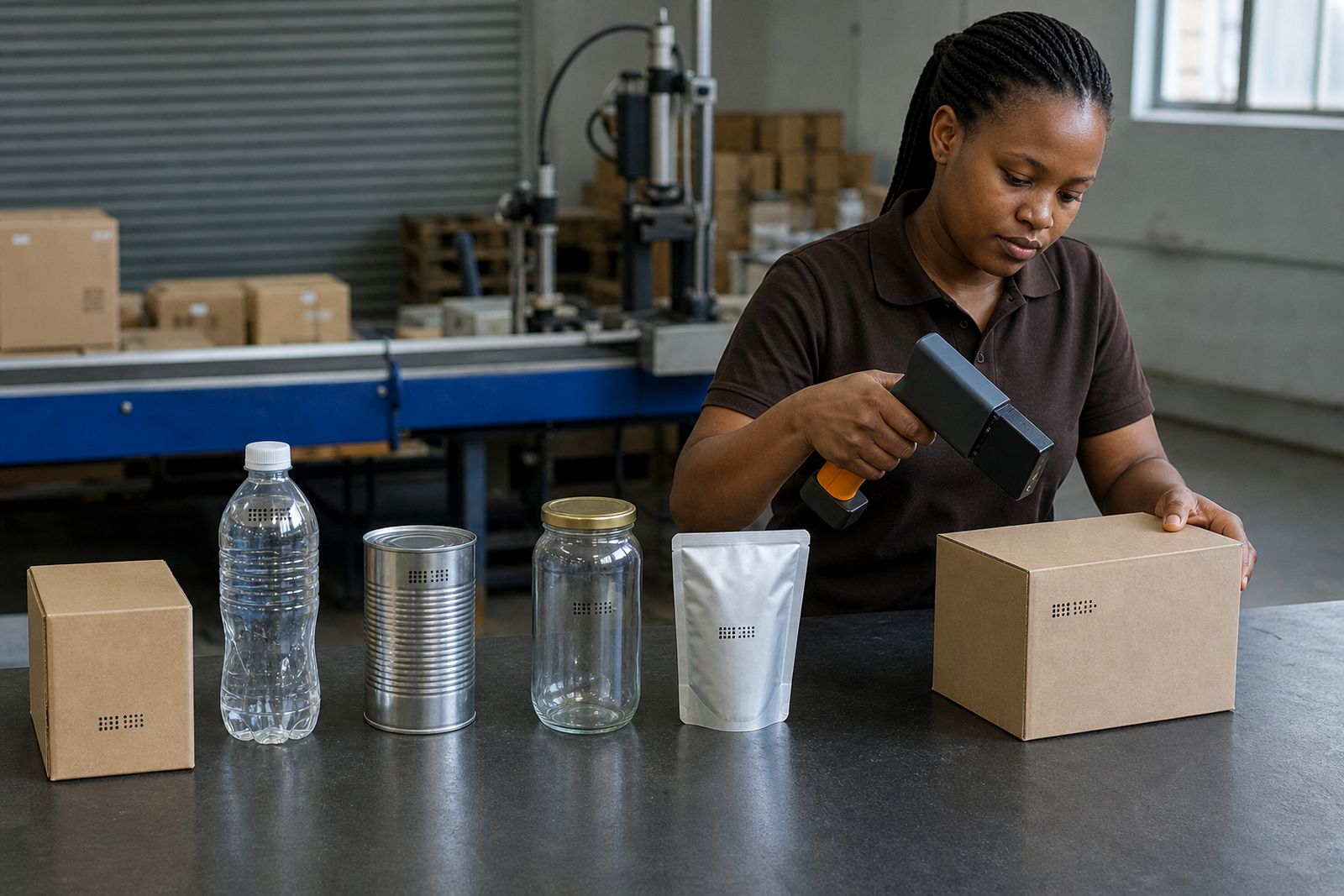
Most enquiries are practical. A customer needs batch coding on pouches, date marking on trays, case marking for dispatch, or lot codes on bottles and lids. We look at the substrate, the environment and the kind of print expected, then point them to the cartridge range that fits the job. In coastal conditions around Durban humidity can affect how packaging behaves, so surface feel and storage conditions matter more than many buyers expect.
- Quick-dry solvent cartridges for plastics, film, metal and glass
- Water-based cartridges for cartons, paper and wood
- White and coloured inks for dark or low-contrast surfaces
- Large-character cartridges for outer cases and shipping marks
The businesses we work with
Our customers are usually operations that pack, seal, label and move product every day. Some run a small packing line with one handheld coder. Others have several stations across receiving, production and dispatch. The common point is that the code must be legible on the actual surface in front of them, not only on a sample card.
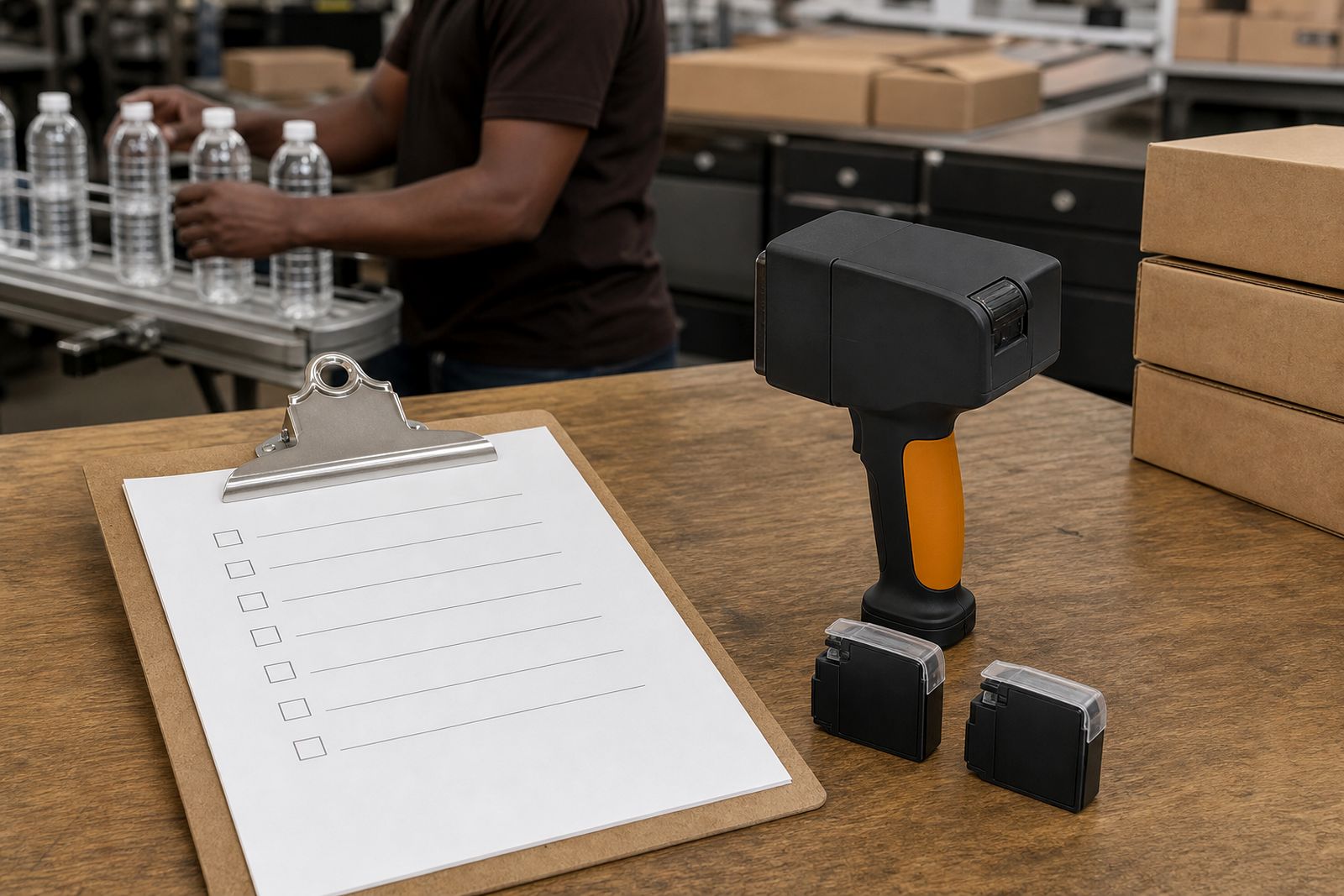
We deal with food and beverage packers, pharmaceutical operations, contract packing teams, logistics warehouses, engineering stores and agricultural packhouses. Each has different concerns. A packhouse may need coding that stays readable on coated cartons after handling. A warehouse may want larger marks on cases for faster stock movement. A factory may need an ink that bites properly on smooth plastic where a water-based option would wipe away too easily.
- Factories packing consumer goods and industrial items
- Packhouses marking cartons, sleeves and transit boxes
- Warehouses adding shipping detail to cases and pallets
- Production teams coding bottles, pouches, jars and lids
How the work moves through our office and stock room
When an enquiry reaches us through our contact form, it is first checked by the office team for the basics: the coder in use, the surface being marked and the kind of message or code required. From there the product support role reviews compatibility and points out where a quick-dry, water-based or pigmented option makes more sense. If a customer is changing substrate, the advice often changes too.
Our stock room team then prepares the cartridge order for dispatch from Pinetown. For customers near Durban, that means a local point of supply with people who understand the sort of packaging materials used in KZN. For customers further away, the same order process feeds into nationwide courier delivery to branches, factories, packhouses and warehouses across every province. The handover is straightforward, but it still needs care, especially where customers are trying to keep coding quality consistent across multiple sites.
After the sale, support does not stop at the carton going out the door. We continue helping with storage guidance, nozzle care and basic fault-finding where a code looks faint, streaked or messy. Often the fix is simple, but only if the right questions are asked first.
Our Pinetown base and nationwide reach
We operate from Pinetown, close to Durban’s industrial routes and well placed for movement into surrounding manufacturing areas. That suits a product range that is used by production teams rather than walk-in retail traffic. Our premises function as an office and stock point where cartridge orders are checked, packed and prepared for onward delivery.
Being based in coastal KZN also keeps us alert to storage conditions. Heat, humidity and time spent in a hot vehicle can all affect ink performance once a cartridge is opened and in use. We therefore speak plainly about how cartridges should be stored, when a cap must go back on, and why dried ink around a nozzle should never be ignored. These are small habits, but they make a real difference on the floor.
- Pinetown office and stock handling point
- Courier dispatch to every province
- Support shaped around factory, warehouse and packhouse use
- Advice that takes local climate and handling conditions into account
From first enquiry to aftercare
A typical job starts with a customer telling us what they need to code and what machine they already have. We ask about the substrate, whether the surface is porous or non-porous, the colour of the pack, and whether the code is small product information or larger shipping text. If the print has been smudging or fading, we ask where that happens in the process, because rubbing on a conveyor is not the same issue as poor adhesion on film.
Once the cartridge type is narrowed down, we confirm compatibility and prepare the order for courier dispatch. We also flag any handling points that matter for that ink range, such as keeping the nozzle clean between runs or avoiding long idle periods with the cartridge left exposed. A customer changing from carton coding to plastic bottle coding will often need a different ink approach, and we say that plainly.
Aftercare is practical rather than scripted. If a code lacks density, looks uneven, or starts drying poorly, we work through surface choice, storage, fitment and nozzle condition. We do not overstate technical matters, and where food or medical packaging is involved we keep our guidance at a general level so the customer can apply their own site rules and internal checks.
What matters to us in day-to-day trade
Customers usually arrive with a production problem, not a theory exercise. They need the right cartridge, they need it matched to the coder and the substrate, and they need advice that makes sense on a live line. That is the standard we work to. We keep the discussion focused on print result, handling conditions and repeatable use, rather than dressing it up with vague claims.
We also know that one wrong cartridge can waste time on a floor that is already under pressure. A faint batch code on a dark pouch, a smeared mark on shrink film, or a weak case code at dispatch can slow everything down. So our role is to narrow the options sensibly and keep the next step clear. It sounds basic, but done properly it saves a lot of frustration for operators and buyers alike.
Questions we get asked
Do you sell handheld inkjet coders as well?
No. We supply inks and cartridges for handheld inkjet coders, and we help customers match the right cartridge to the machine and surface already in use.
Can you help if my code is fading or smudging?
Yes. We can advise on likely causes such as the wrong ink type for the substrate, poor nozzle condition, storage issues or handling on the line, then point you to a more suitable cartridge option.
Do you deliver outside Durban?
Yes. Orders are prepared from our Pinetown base and couriered to factories, packhouses and warehouses across South Africa.
Also worth a look
Tell us about the job
Send sizes, materials and where you are through our contact form, and we will come back with the practical options.
Open the contact form