
What you can code on
Handheld inkjet coding works best when the cartridge suits the surface in front of you. This section covers the main materials businesses mark every day, from cartons and labels to plastic film, metal and glass.

Start with the surface, not the code
A date, batch number or shipping mark may look simple, but the material under it changes everything. Absorbent stock such as cartons and paper pulls ink in, while smooth material such as plastic film or glass tends to leave ink sitting on the surface until it dries. That is why the first question is usually not what you want to print, but what the pack is made from.
We supply inks and cartridges for handheld inkjet coders used across factories, packhouses and warehouses, and we help customers match the cartridge to the substrate and the coder they already run. We do not sell the coding units themselves, and we do not print products on behalf of clients.
Absorbent materials need a different ink behaviour
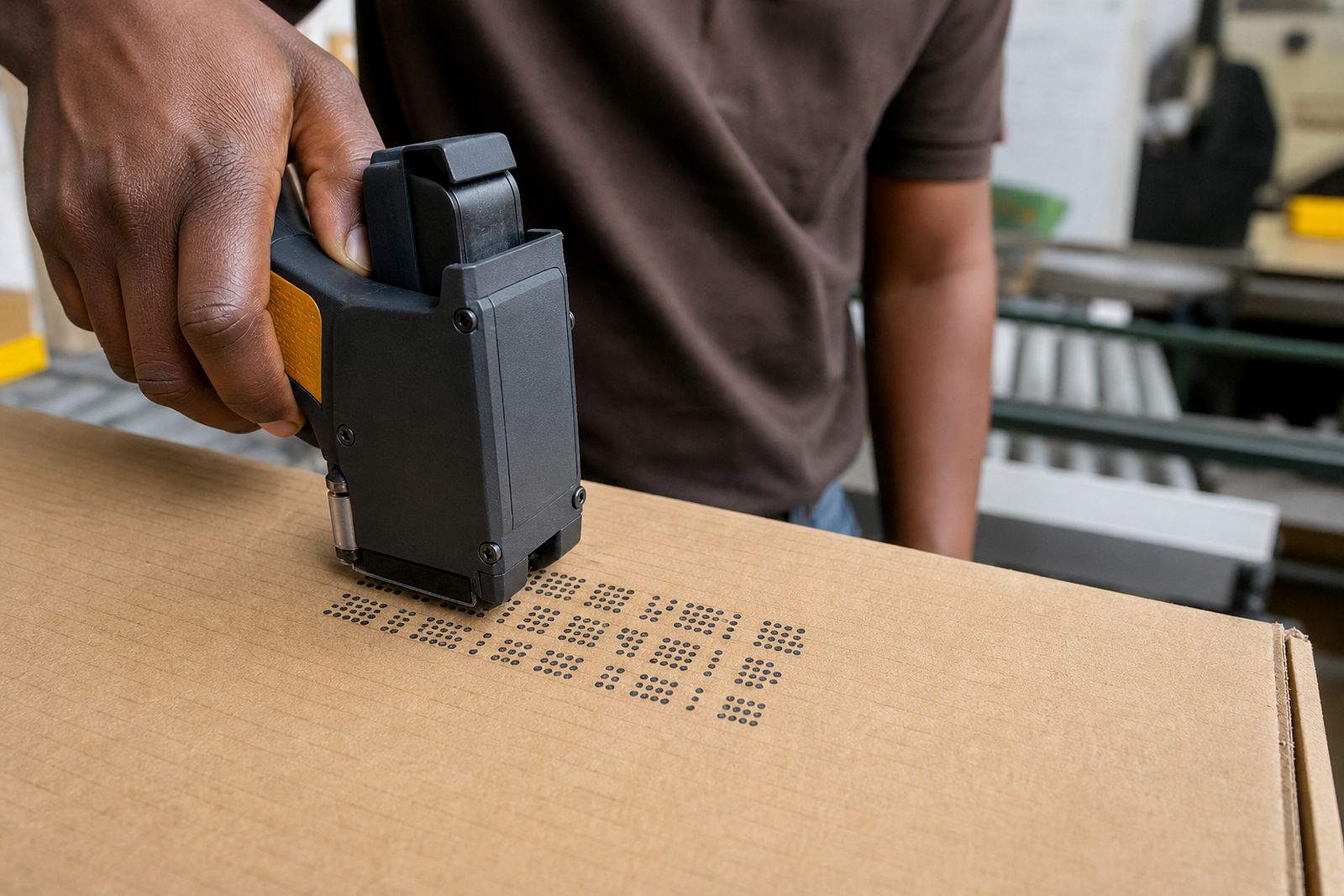
Cartons, paper labels and untreated wood usually take water-based ink well because the surface absorbs the print and helps keep the code tidy. These materials are common in outer cases, shelf-ready boxes and timber packaging where black text on a light background needs to stay legible through handling and stacking.
- Cartons and paperboard generally suit water-based cartridges.
- Paper labels often print cleanly where the coating is not too glossy.
- Untreated wood can take larger text well for crate marking and yard identification.
- Very slick or heavily coated board may need a different approach than plain carton.
If your operation codes mixed board grades, it helps to mention whether the surface is plain, coated or waxy. That small detail often matters more than people expect.
Smooth plastics and film call for quick-dry solvent ink
Plastic pouches, shrink wrap, bottles and laminated film normally need quick-dry solvent cartridges. On these non-porous surfaces, water-based ink can smear or rub before it settles, especially where packs move straight from sealing to boxing. Solvent formulations are commonly chosen where production lines handle flexible packaging or rigid plastic containers.
- Plastic film usually needs fast surface drying and good rub resistance.
- Bottles and tubs can vary by resin and finish, so surface feel matters.
- Glossy laminated wraps are often less forgiving than matt stock.
- Freshly filled or chilled packs may affect adhesion if condensation is present.
In Durban humidity and coastal air can make a line behave a bit differntly from an inland warehouse, especially on cold packs. A code that looks fine at the nozzle can still mark poorly if moisture sits on the substrate.
Metal, glass and other hard non-porous stock
Coding onto tins, lids, foil-faced packs, glass jars and coated pipes usually sits in the same broad group as plastics: the surface is closed, smooth and not naturally absorbent. That means cartridge choice leans toward quick-dry solvent options, with attention paid to how clean and dry the item is before coding.
These jobs often need practical checks rather than guesses. Oily residue, release agents, dust from a production area or condensation on glass can all weaken a printed mark. Where the code must stay readable through transport and storage, surface condition is just as important as ink type.
Dark packs need contrast, not just adhesion
Not every coding problem is about whether the mark sticks. On black film, dark blue cartons or tinted plastic, the issue is often visibility. White and coloured inks are used where standard dark print disappears into the background or becomes hard to read under warehouse lighting.
- White ink is often used on black, navy or dark green packaging.
- Coloured options can help sort product lines or warehouse routes.
- Larger characters improve readability on shipping cases and outer packs.
- Contrast should be checked under the light conditions used on site.
For outer case coding, large-character cartridges are often chosen where operators need bold text across corrugated cases. For smaller retail packs, a standard cartridge may still be the better fit if space is tight.
A practical way to narrow the choice
When customers in Pinetown or further afield ask which cartridge to order, we usually work through a short comparison based on the material, the finish and the size of the required code. That keeps the decision grounded in the real job rather than in guesswork.
- Choose water-based cartridges for absorbent materials such as cartons, paper and wood.
- Choose quick-dry solvent cartridges for non-porous surfaces such as plastics, film, metal and glass.
- Choose white or coloured ink when the pack is dark and standard print lacks contrast.
- Choose large-character cartridges when outer cases need bigger text for dispatch or warehouse handling.
If you are comparing two similar packs, tell us the surface finish, the colour, and whether the code is for retail units or shipping cases. We can then point you to the most suitable page in this section, or you can send the details through our contact form for cartridge guidance and nationwide courier supply.
Explore the range
Coding cartons, paper and wood
A practical look at getting readable codes onto porous cartons, paper sleeves and unfinished wood.
Read more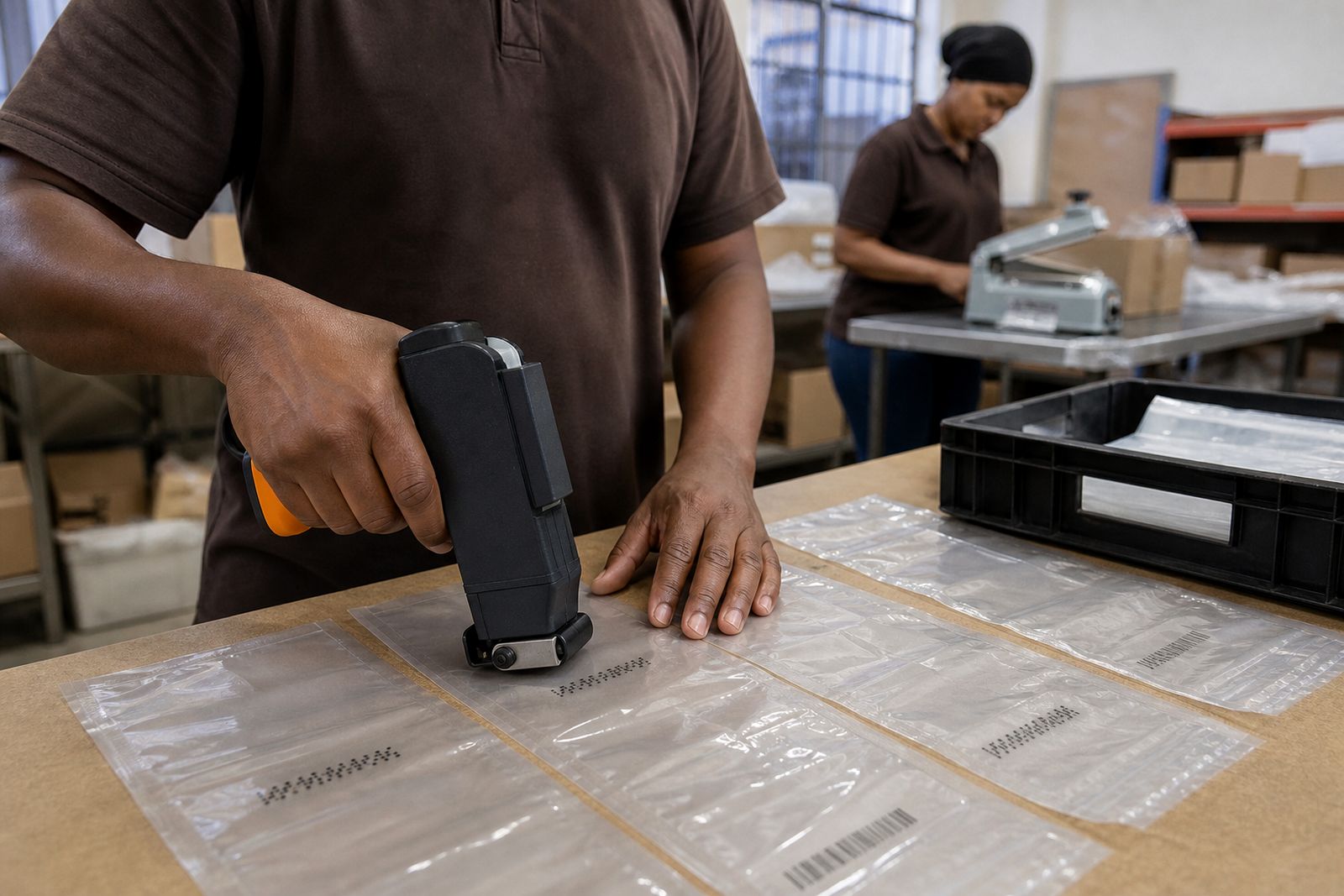
Coding plastics, bottles and film
A practical guide to getting clear codes onto non-porous packs without smudging, rub-off or poor adhesion.
Read more
Coding metal, glass and pipes
Practical notes on getting clear codes onto cans, jars, metal stock and pipe lengths without smudging or patchy print.
Read moreWhat our Coding Ink customers say
Verified Google reviews
Questions we get asked
Can one cartridge type cover every surface in our packing area?
Usually not. Absorbent materials and non-porous materials behave differently, so many sites keep separate cartridge types for cartons and for plastics, film, metal or glass.
Do dark cartons and black film always need white ink?
Not always, but dark packaging often needs higher contrast than standard dark print can give. White or coloured inks are commonly used where readability is poor under normal factory or warehouse lighting.
Do you test or repair handheld coders?
No. We supply inks and cartridges for handheld inkjet coders, help with cartridge matching, and advise on storage and nozzle care, but we do not sell or repair the coding units themselves.
Tell us about the job
Send sizes, materials and where you are through our contact form, and we will come back with the practical options.
Open the contact form