

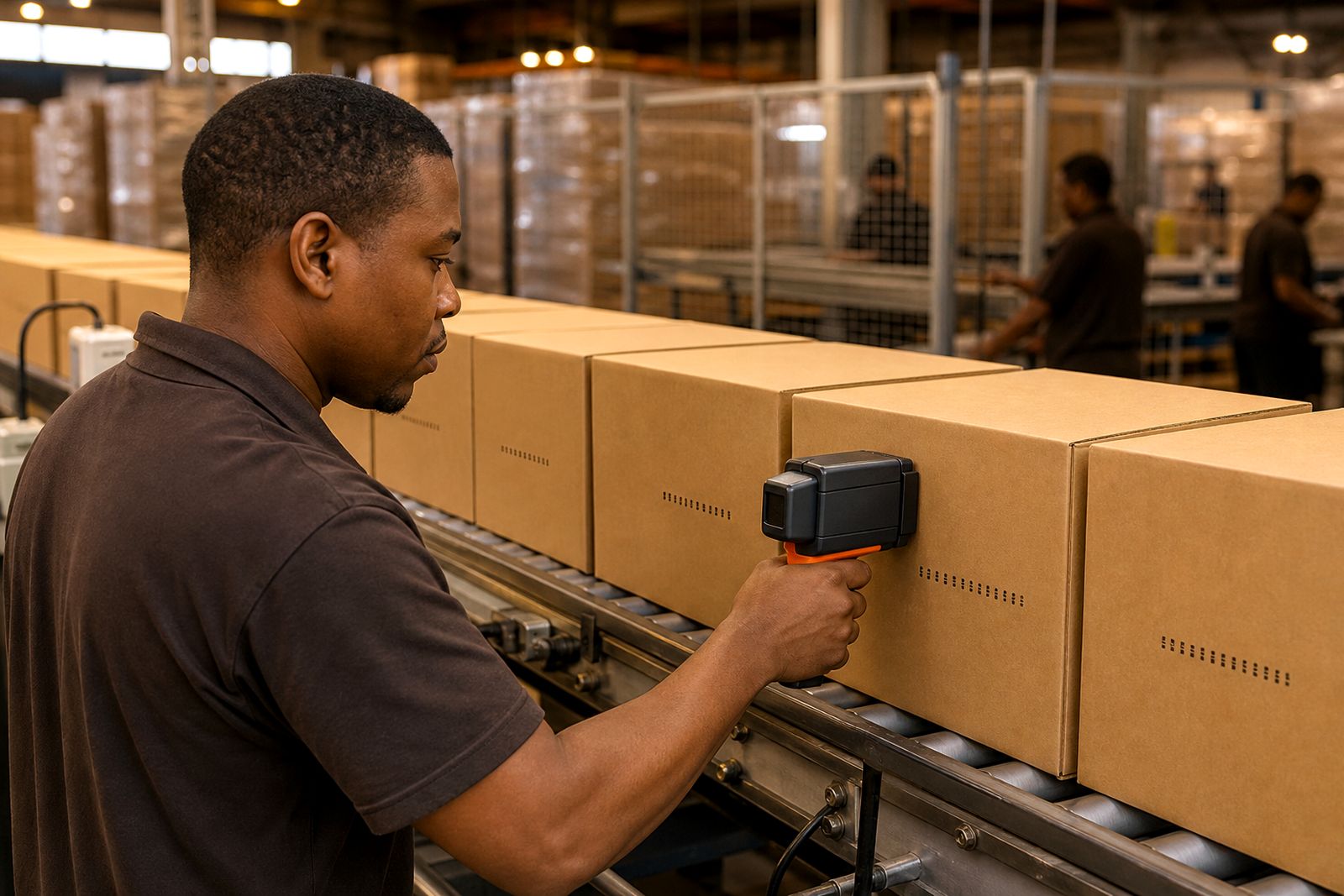
Ink cartridges for handheld inkjet coders
HandheldPrinter Inks supplies cartridges and inks for handheld inkjet coders used to mark dates, batches and barcodes on packed goods. From Pinetown near Durban, we help factories, packhouses and warehouses match the right cartridge to the surface being coded.
Cartridges built around the surface, not guesswork
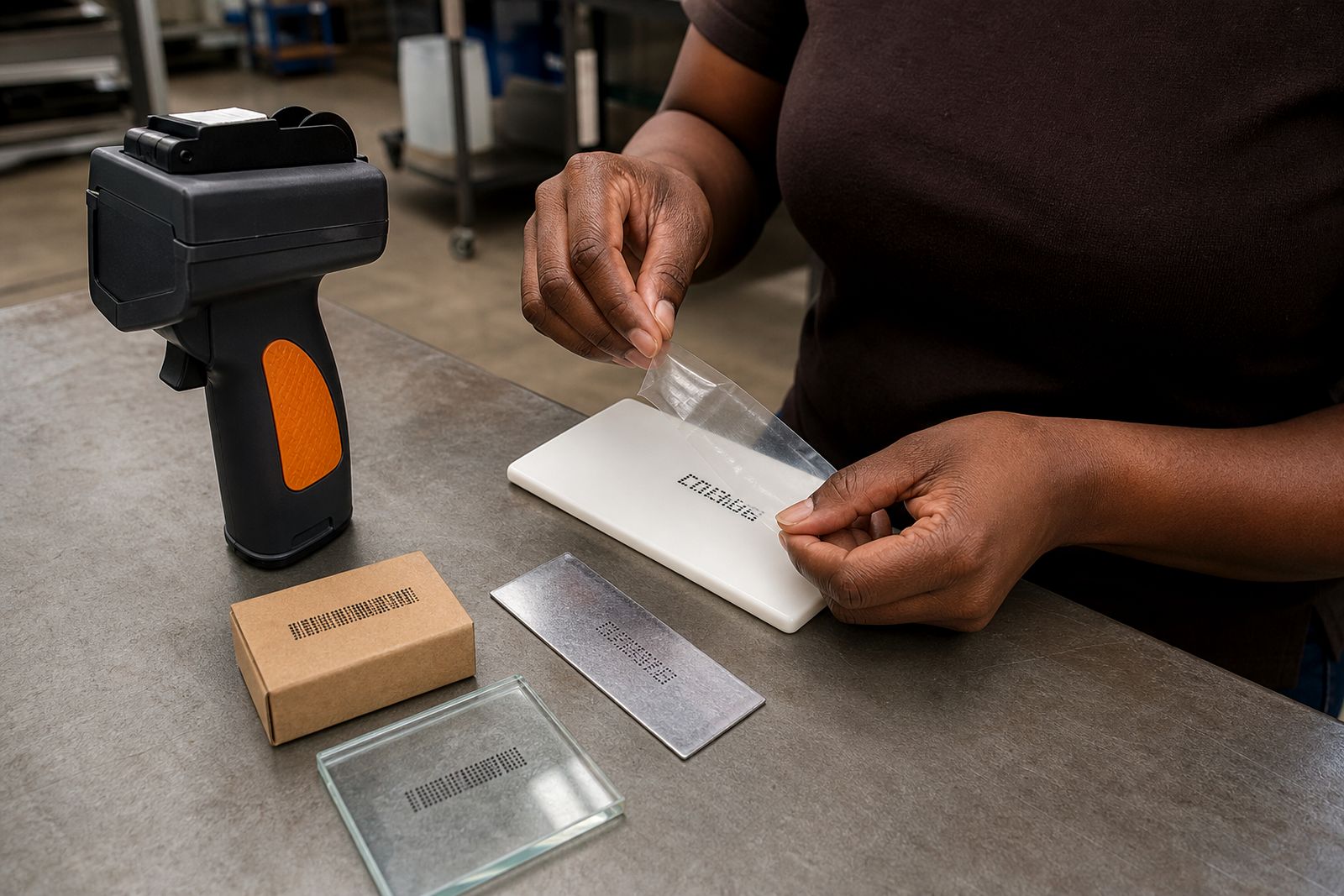
A handheld coder only performs properly when the cartridge suits the material in front of it. We supply quick-dry solvent cartridges for non-porous items such as plastic tubs, shrink film, metal lids and glass jars, and water-based cartridges for absorbent materials such as cartons, paper labels and timber. We also supply white and coloured inks for darker packs where black text disappears, plus large-character cartridges for outer cases and warehouse marks.
Most coding trouble starts with the wrong ink choice rather than a fault on the line. A code that looks neat on one bottle can smear on another if the plastic finish changes, and a carton that absorbs too much can leave text looking woolly. We help customers narrow that down before ordering so the cartridge and substrate make sense together.
- Quick-dry solvent cartridges for plastics, film, metal and glass
- Water-based cartridges for cartons, paper and wood
- White and coloured inks for dark or tinted surfaces
- Large-character cartridges for shipping cases and outer packs
- General guidance on storage, nozzle care and handling
Where to start
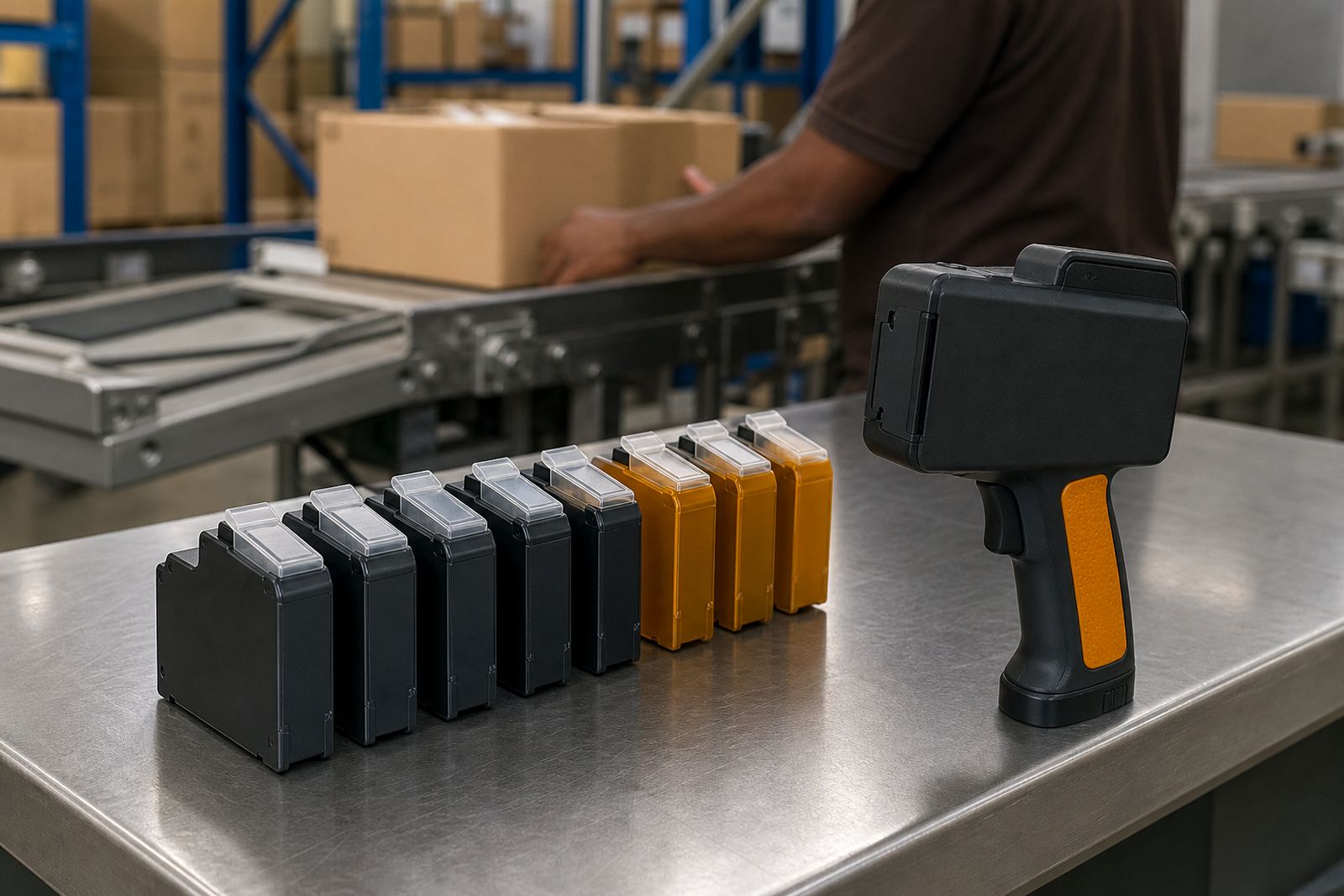
Inks and cartridges
Compare quick-dry, water-based, white, coloured and large-character cartridges for handheld coding jobs.
Read more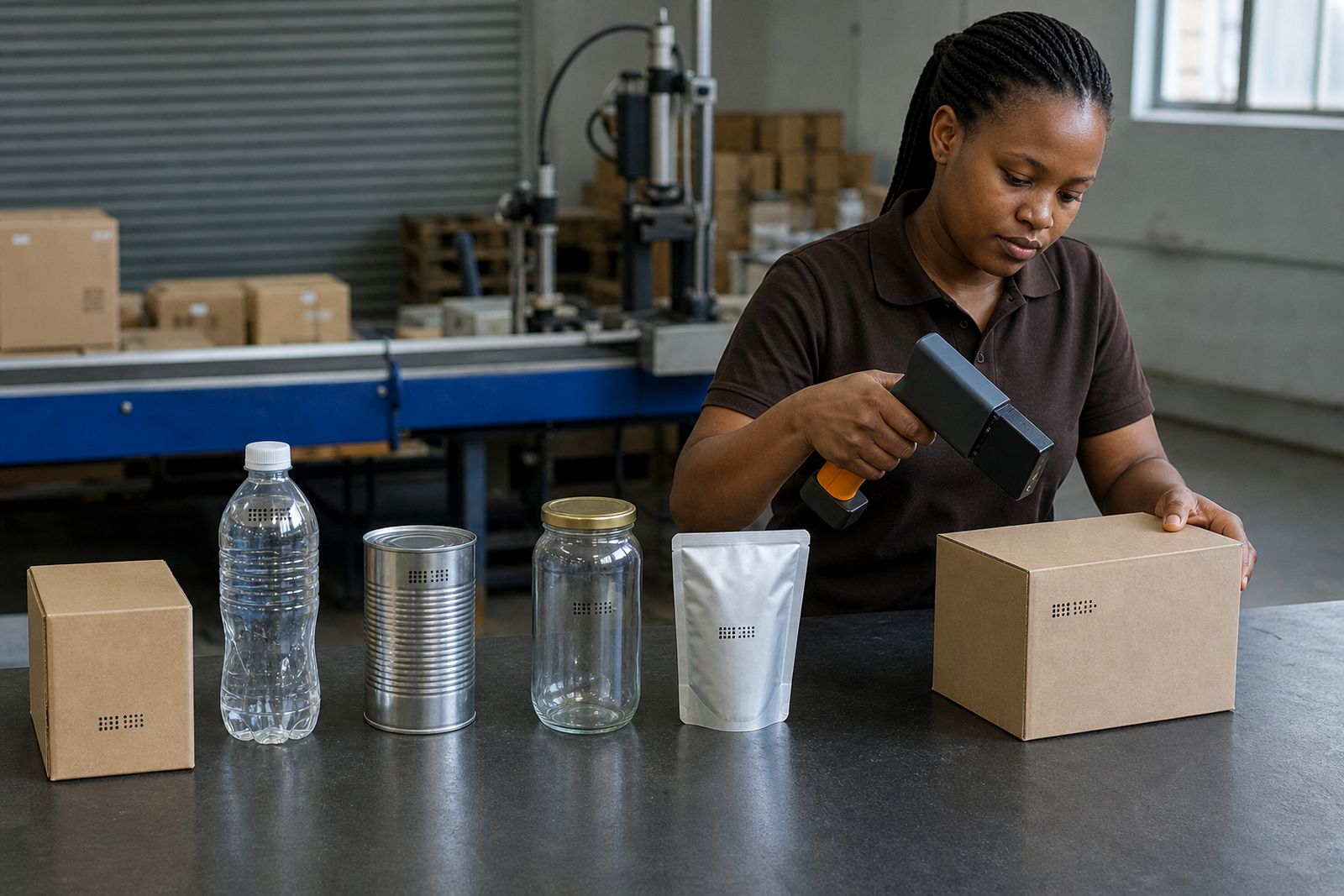
What you can code on
See which cartridge types suit cartons, plastics, film, metal, glass and darker pack surfaces.
Read more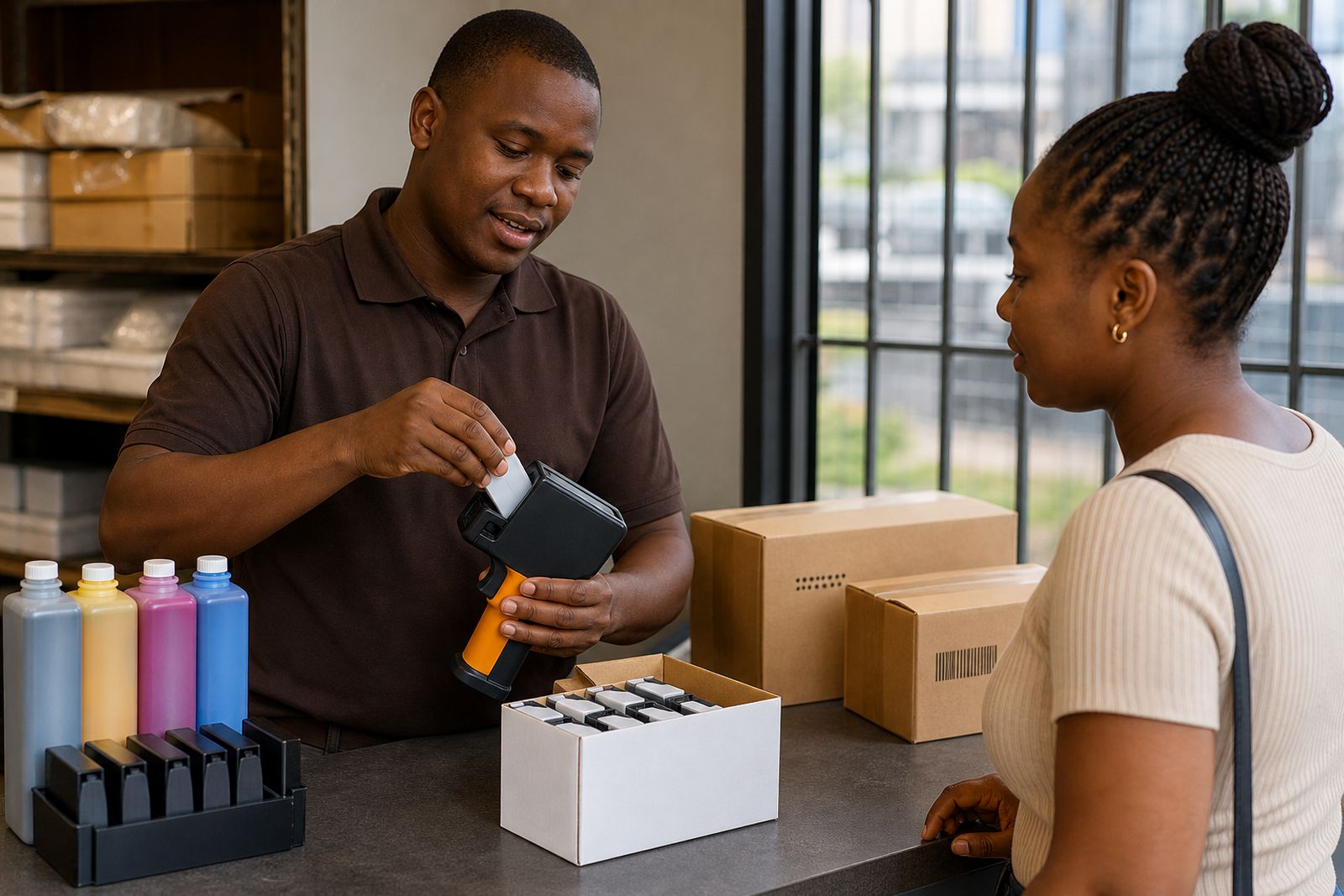
Cartridge support
Practical cartridge help for handheld coders, from surface matching to nozzle care and nationwide couriering.
Read more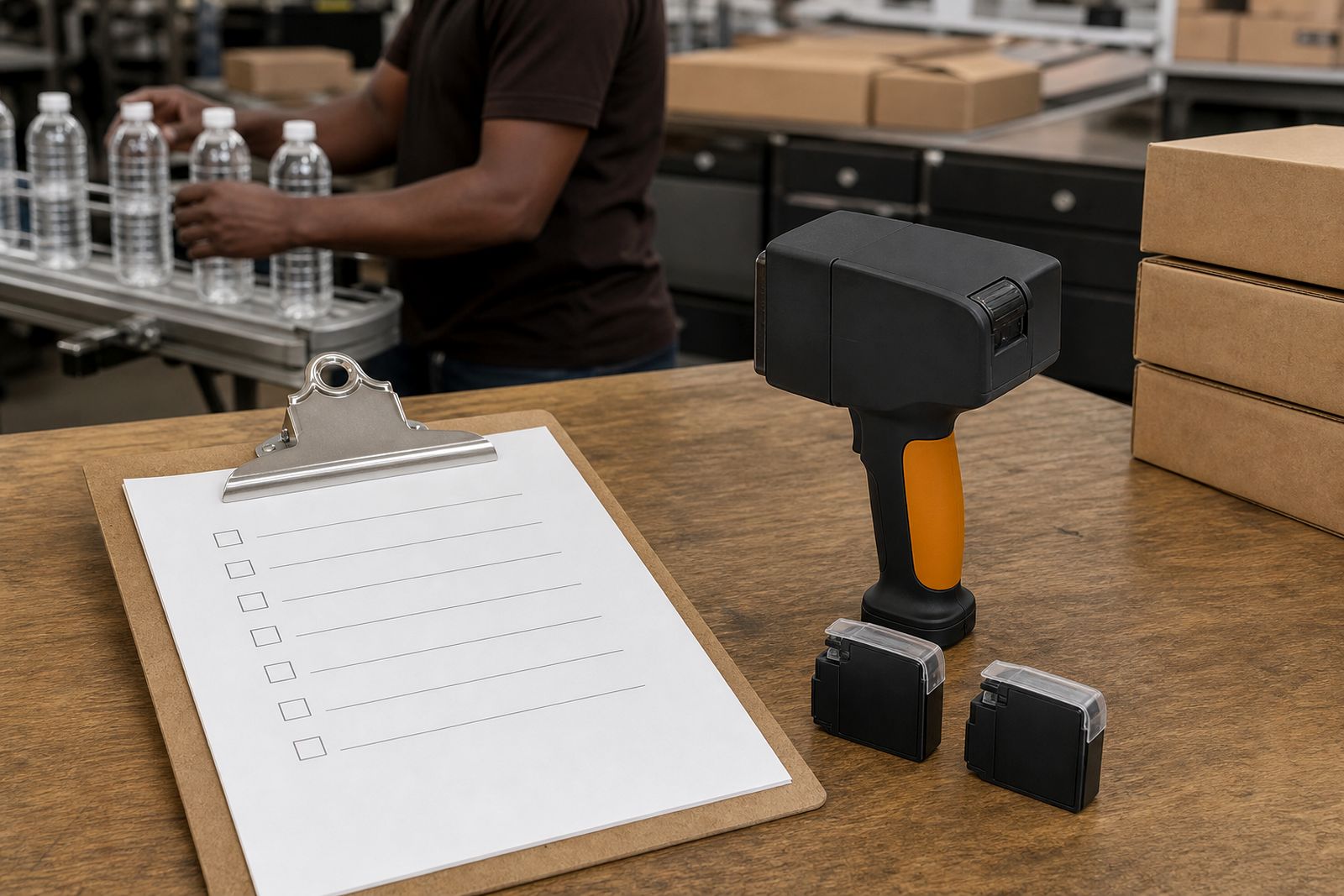
Coding guides
Practical notes on surface choice, cartridge care and clearer codes for packing lines across South Africa.
Read more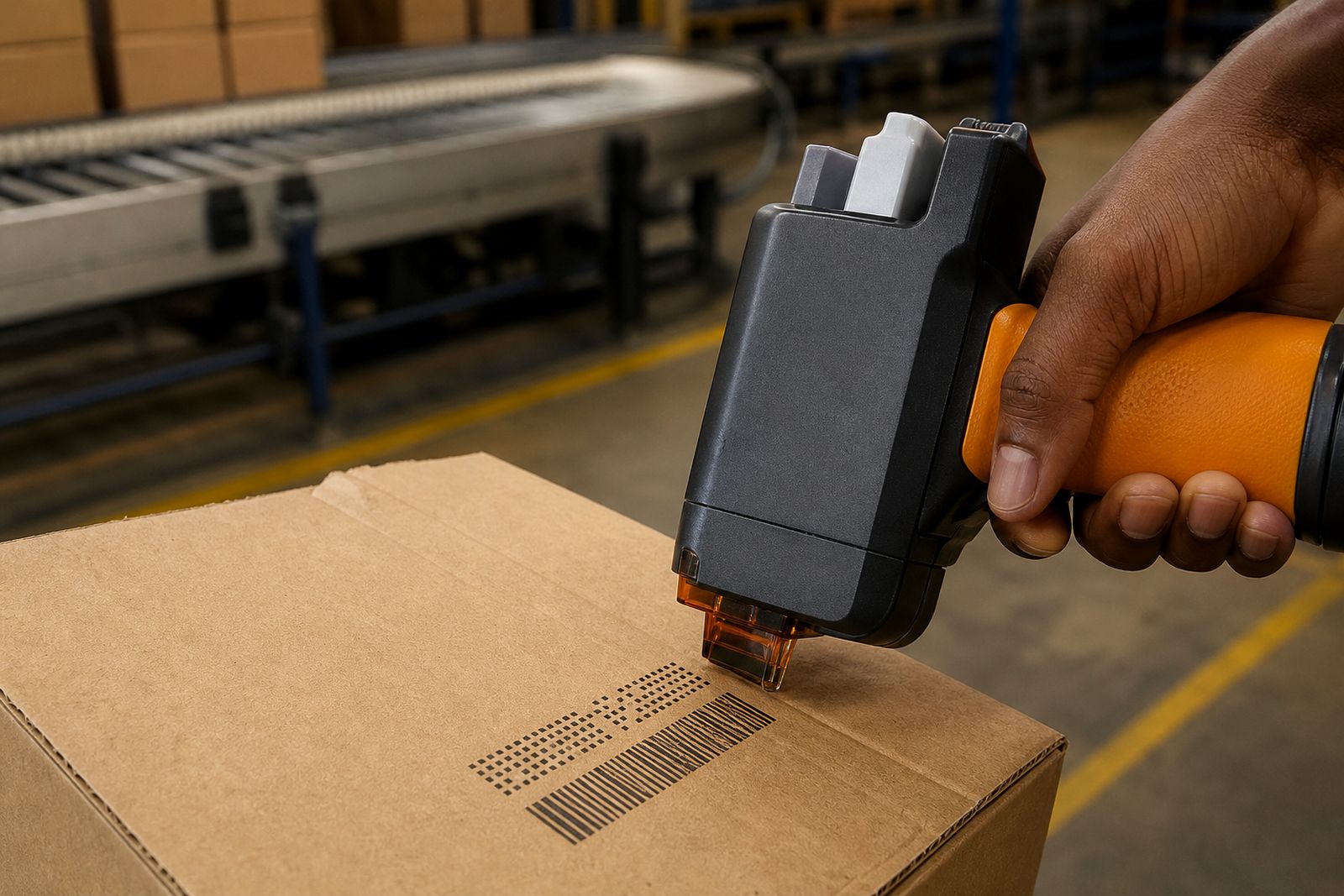
Where these cartridges fit on a real packing floor
Our range suits businesses that code product information during packing, sealing and dispatch. That includes food and beverage packing lines, pharmaceutical packing rooms, logistics operations and general manufacturing where a date, batch or traceability mark needs to go onto the product or the case. We do not sell the handheld coders themselves, and we do not take in machines for repair, but we do help customers identify the cartridge type that matches the coder they already use.
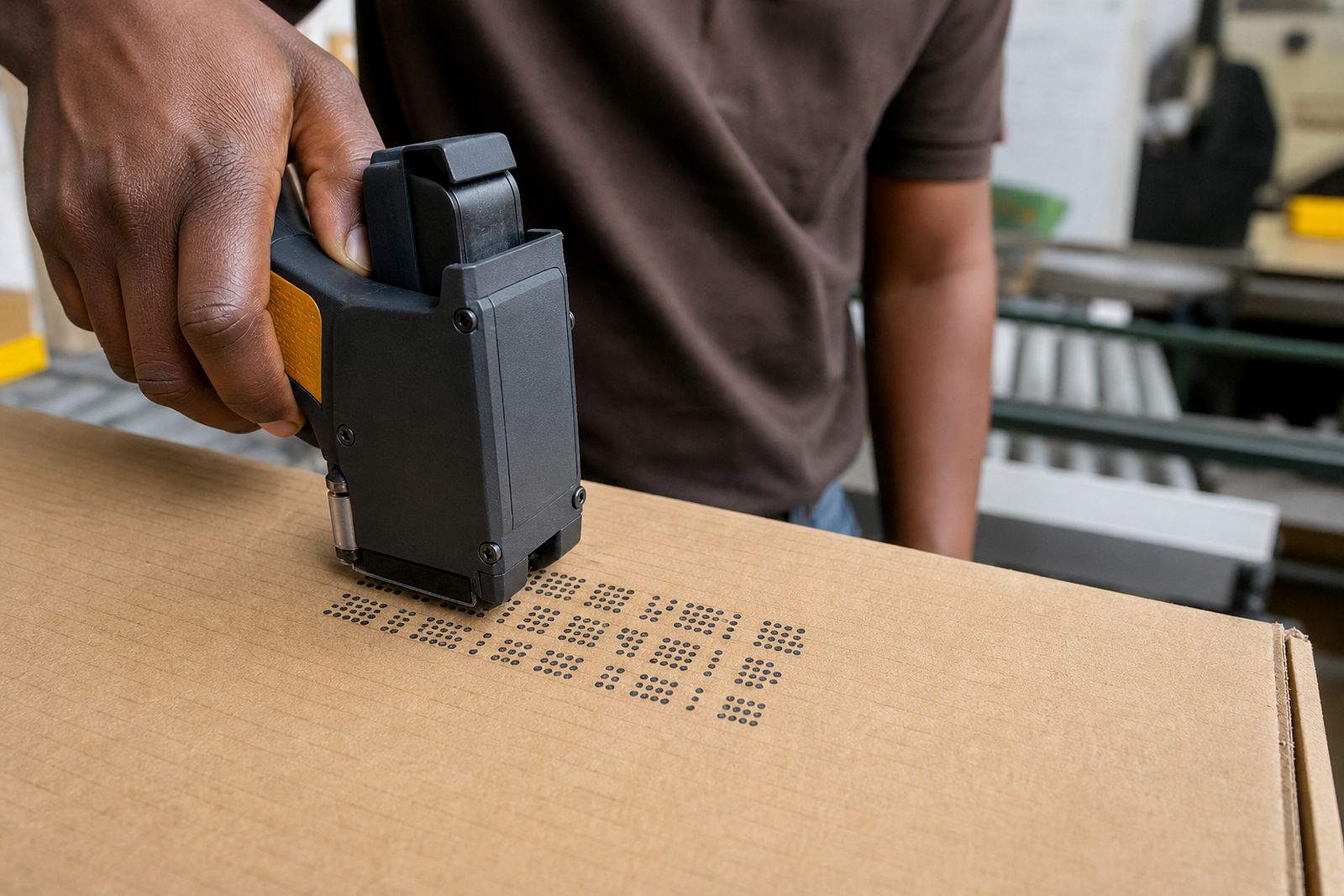
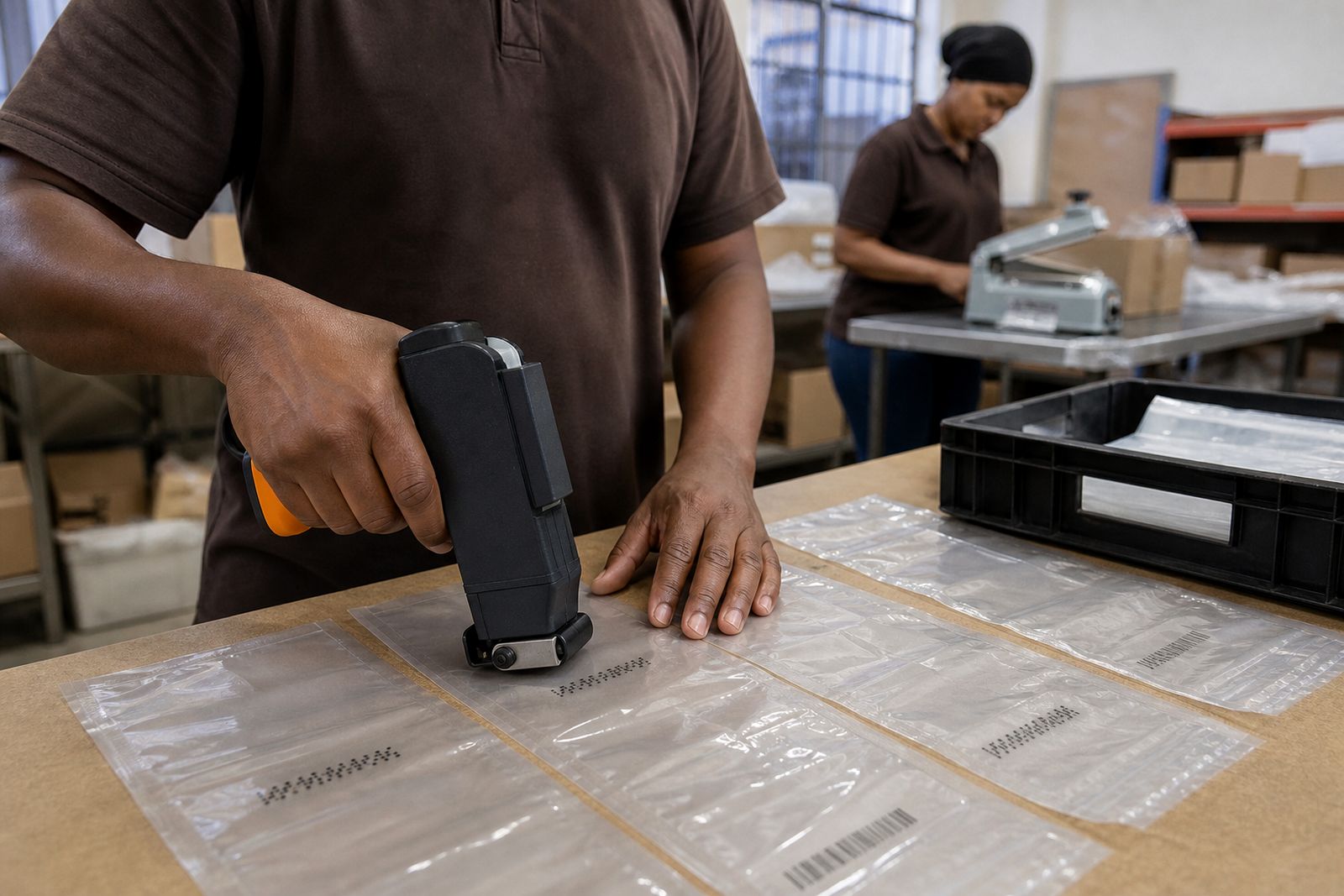
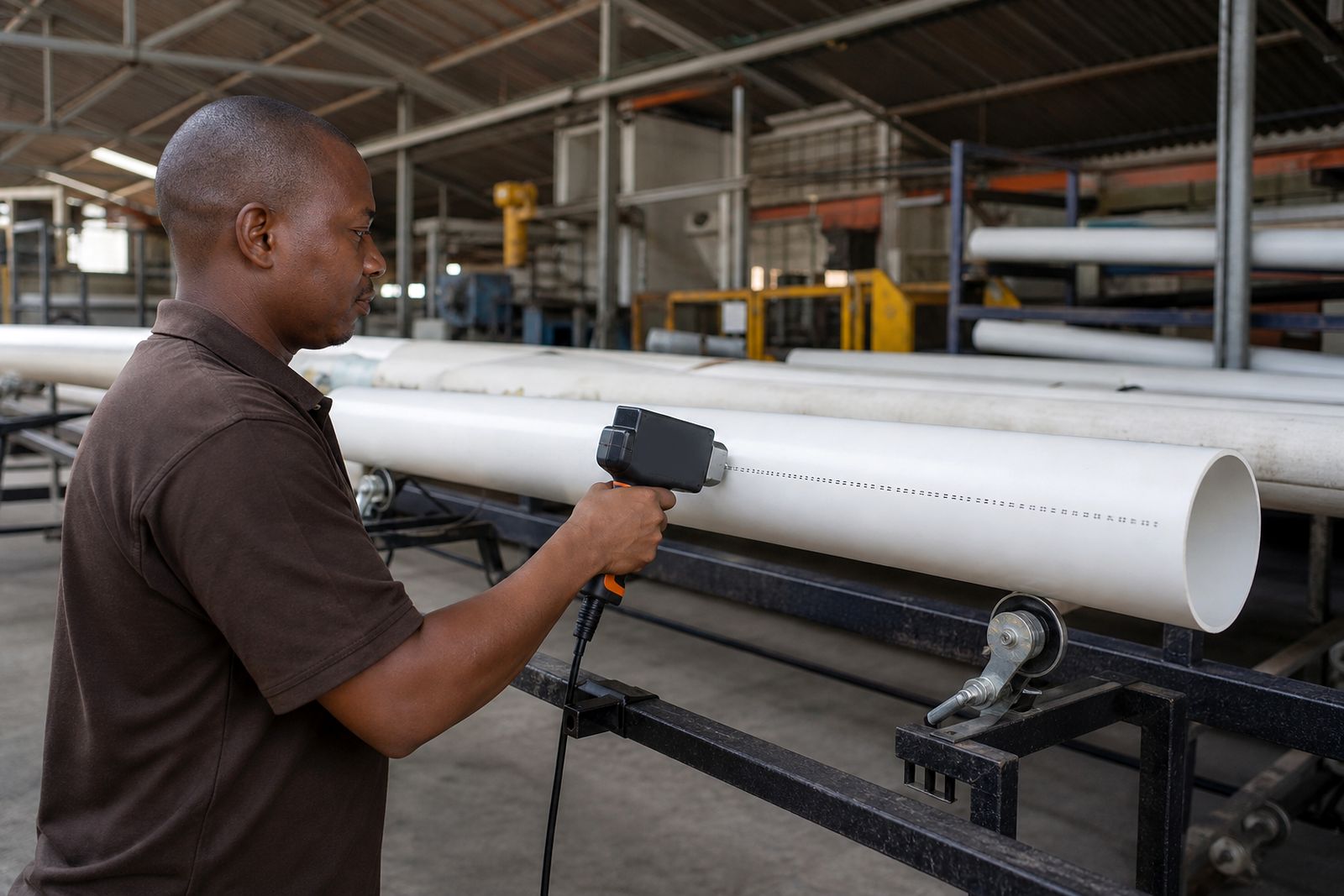
Typical applications include use-by or packed-on dates on sleeves and cartons, batch numbers on pouches, barcodes on boxes, and dispatch details on outer cases. On some lines the main issue is adhesion to film, while on others it is legibility on brown board or contrast on dark plastic. Those are different jobs and need different ink choices, even when the coder in hand looks the same.
- Date and batch coding on packed goods
- Barcode marking on cartons and cases
- Outer case coding for warehousing and dispatch
- Short production runs where a handheld unit is practical
How an order usually takes shape
Most customers start with three pieces of information: the coder they use, the surface they need to mark, and the content being printed. That may be a date line, a batch code, a simple barcode or a larger shipping mark. From there we point them to a cartridge type that suits the substrate and the level of contrast needed. If the print has to land on a curved bottle, a waxy carton or a dark sleeve, that detail matters early.
It also helps to know whether the mark is going onto the product itself, the label, or the outer case. Porous and non-porous materials behave very differently, and a cartridge that works on corrugated board will not automatically suit glass or film. A small change in substrate can shift the result quite a bit.
Orders are couriered from Pinetown to customers across South Africa, including factories and warehouses inland where dry conditions affect open nozzles, and coastal sites where humidity can influence handling and storage. We keep the process practical and tied to the job at hand rather than pushing one cartridge for every line.
From Pinetown to every province
Our base is in Pinetown near Durban, with cartridge orders going out by courier to operations across the country. That covers local industrial areas around Durban as well as packhouses, production sites and distribution centres in other provinces. Customers often need a regular source for coder consumables without having to buy a new machine or change the way the line is set up.
For coastal businesses, especially around Durban, moisture in the air can affect how cartridges are stored once opened. For inland warehouses, dust and warmer storage spots can dry a nozzle faster than staff expect. These are ordinary trade issues, but they make a difference to print quality and cartridge life on the shelf and on the line.
- Pinetown and greater Durban industrial areas
- Factories and packhouses in all provinces
- Warehouses needing case coding consumables
- General manufacturing and dispatch operations
One trade issue that causes wasted cartridges
Nozzle condition is one of the biggest reasons a handheld coder prints faintly, spits ink or leaves broken characters. The cartridge may still contain ink, but a blocked or drying nozzle face will interrupt the throw of the droplets and the code starts looking patchy. This is common where operators pause between runs, leave a unit uncapped too long, or store cartridges near heat. It sounds minor but it can waste labels, cartons and time on a shift.
Good nozzle care starts with matching the ink to the substrate, because operators are less likely to overwork a cartridge when the ink is right for the job. It also means storing cartridges correctly, keeping the nozzle area clean, and avoiding rough handling during changeovers. On dark packs, white and coloured inks need the same attention because visibility depends on a consistent laydown from the first character to the last.
When a code looks faded, the answer is not always more pressure from the operator or more passes over the same spot. A fresh wipe of the print area, a check on the substrate finish, and the right cartridge choice often sort out the real cause. Thats usually where better results start.
What to send when you need the right cartridge
If you need help narrowing down a cartridge, send the basic job details through our contact form. The most useful notes are the coder model, the material being marked, the colour of the surface and whether the print is text, date format or barcode. If you are moving from one pack material to another, mention that too, because the ink that worked on plain board may not suit coated cartons or plastic film.
Where possible, include whether the code goes onto individual packs or outer cases, and whether the surface is light, dark, glossy, matt or slightly textured. That gives us a practical starting point for pointing you to solvent, water-based, white, coloured or large-character options.
- Coder model or cartridge reference
- Surface type such as carton, film, glass or metal
- Light or dark background colour
- Text, date code or barcode requirement
- Whether it is for product packs or shipping cases
From our notes
Questions we get asked
Do you sell handheld inkjet coders as well?
No. We supply inks and cartridges for handheld inkjet coders, but we do not sell the coder units or repair them.
Which ink works best on plastic and film?
Non-porous materials such as plastics and film usually need a quick-dry solvent cartridge. The exact choice still depends on the surface finish, colour and the type of code being printed.
Can you help with white ink for dark packaging?
Yes. We supply white and coloured cartridge options for darker surfaces where standard dark print would not stand out clearly.
Tell us about the job
Send sizes, materials and where you are through our contact form, and we will come back with the practical options.
Open the contact form