

Cartridge support
Cartridge support covers the practical part of getting clean, readable codes from the right ink cartridge on the right surface. We help South African packing, warehousing and production teams choose correctly, fit cartridges properly and look after them between runs.
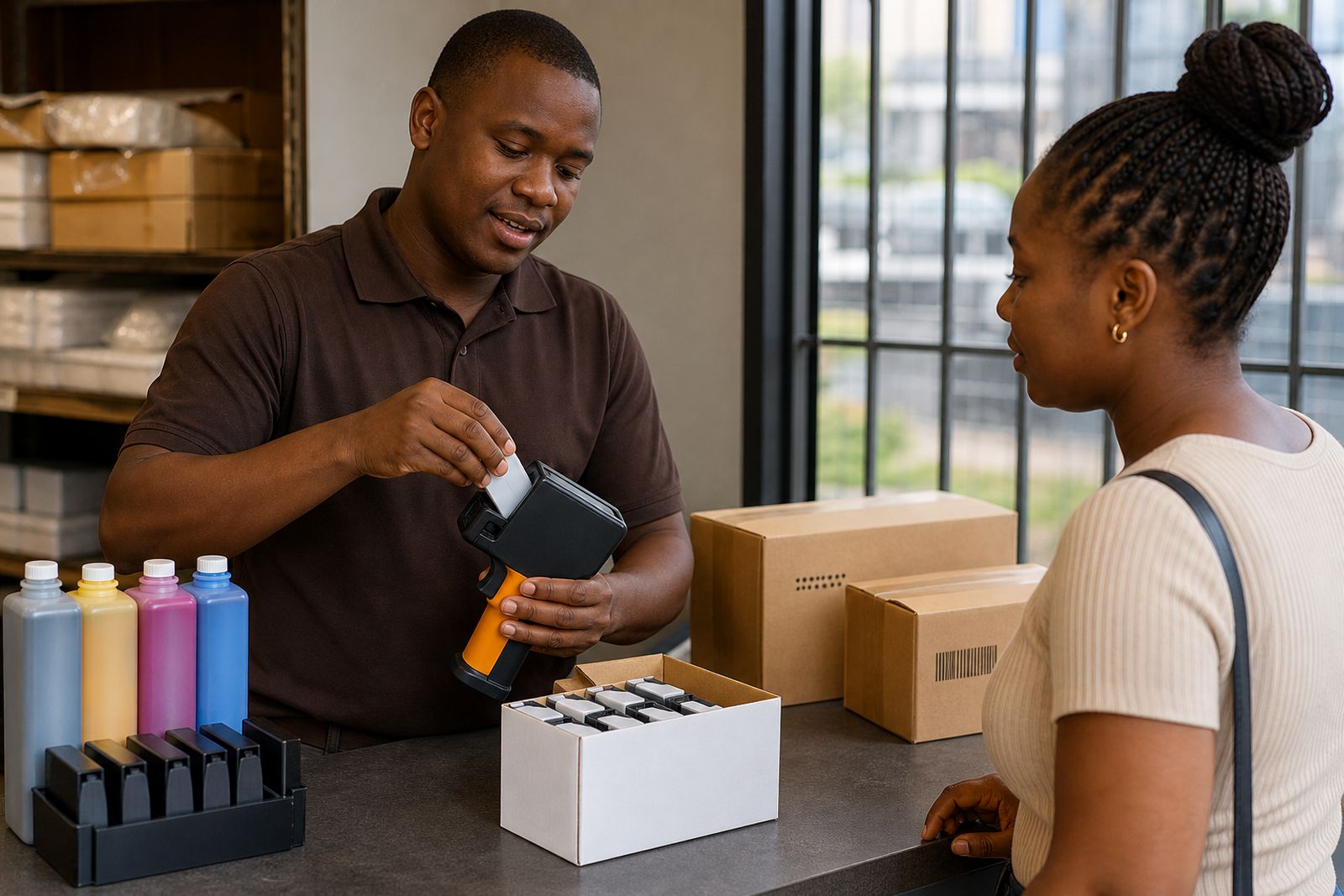
Support that starts with the coding surface
Most cartridge problems begin before the cartridge is opened. A code that fades on shrink film, feathers on carton, or rubs off a painted tin usually points to a mismatch between the ink type and the surface rather than a faulty coder. Our support starts by checking what you are coding on, how the product is packed, and where the marks need to stay legible during storage, transport and handling.
We assist with cartridges for handheld inkjet coders used on cartons, paper, wood, plastics, film, metal, glass and shipping cases. Where the pack is dark, we can guide you on white or coloured inks so the code stands out properly under warehouse lighting or on a busy line.
- Quick-dry solvent cartridges for non-porous surfaces such as plastics, film, coated packs, metal and glass.
- Water-based cartridges for porous materials such as cartons, paper labels and timber.
- White and coloured inks for dark substrates where black print disappears.
- Large-character cartridges for outer cases, dispatch marks and warehouse identification.
We do not sell the handheld coders themselves and we do not repair them, but we do help you match the cartridge to the machine and the job so you avoid waste on the floor.
How the cartridge support process works
The process is straightforward and built around the way factories and packhouses actually order. You send the details through our contact form, and we review the machine type, the cartridge currently in use if there is one, and the substrate being marked. If there is an issue with smudging, faded print or blocked nozzles, we look at that pattern as well before pointing you to the most suitable cartridge option.
- You tell us what the product surface is, for example carton, stretch film, PET bottle, steel lid or glass jar.
- You note whether the code is date, batch, shift, line code, address data or large outer-case text.
- You share the cartridge type or machine compatibility details where available.
- You mention if the surface is dark, glossy, dusty, chilled or exposed to coastal humidity.
- We guide you to the cartridge type and basic handling steps for fitting and use.
For teams in Pinetown near Durban and for plants elsewhere in the country, the advice is the same: choose for the surface first, then confirm compatibility, then check handling and storage. That order saves a lot of frustration later.
What to prepare before you enquire
Good information at the start helps narrow down the cartridge faster. A photo of the current print result can help, especially where a code looks pale at one side or where the first print after a pause is weak. If you have the current cartridge label or compatibility reference, include that too. It keeps the conversation practical and avoids guessing.
- The material being coded and whether it is porous or non-porous.
- The colour of the pack and the colour you want the code to appear in.
- The size of the message, including whether it is standard text or larger dispatch marking.
- How the item is handled after coding, such as stacking, shrink-wrapping, cold room use or transport.
- Any storage conditions that matter, including heat in inland warehouses or damp coastal air.
If a cartridge has already been fitted and is misbehaving, tell us whether the issue is missing lines, smearing, weak density or intermittent firing. Small details matter here, and a short note often tells us more than a long description.
Fitting, handling and day-to-day care
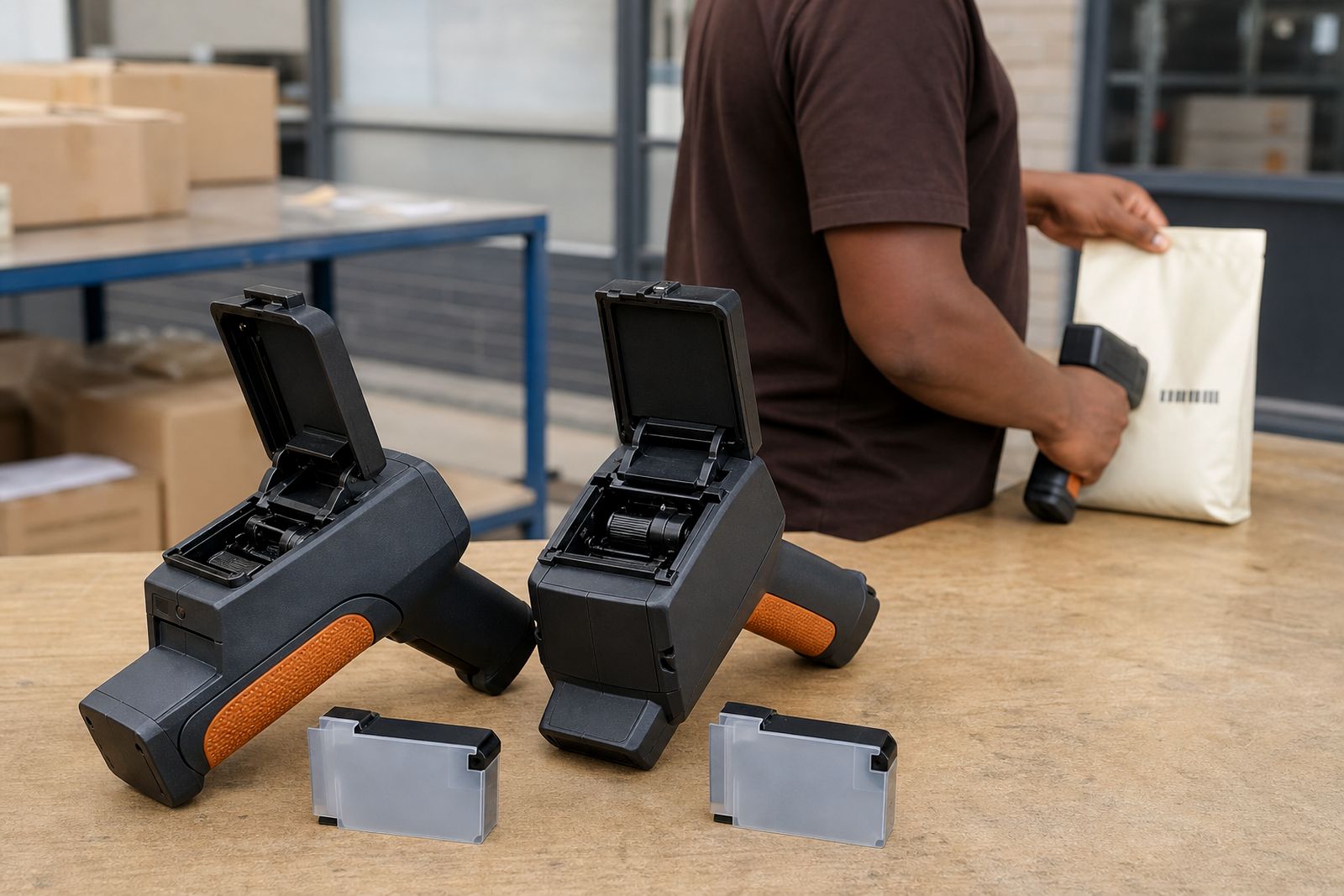
A cartridge can be the correct type and still print poorly if it is fitted in a rush or left open too long between runs. We guide customers on basic fitting, nozzle care and storage practices that help maintain consistent print quality. This includes checking the contact area, seating the cartridge correctly, capping it when not in use, and keeping the nozzle face clean without rough wiping.
Handheld coders are often used on receiving floors, dispatch bays and packing lines where dust, carton fibre and film residue build up quickly. That is normal, but it means the operator should look at the nozzle area regularly and store cartridges properly when a shift ends. A small bit of contamination can make a code look broken, and then the wrong part gets blamed.
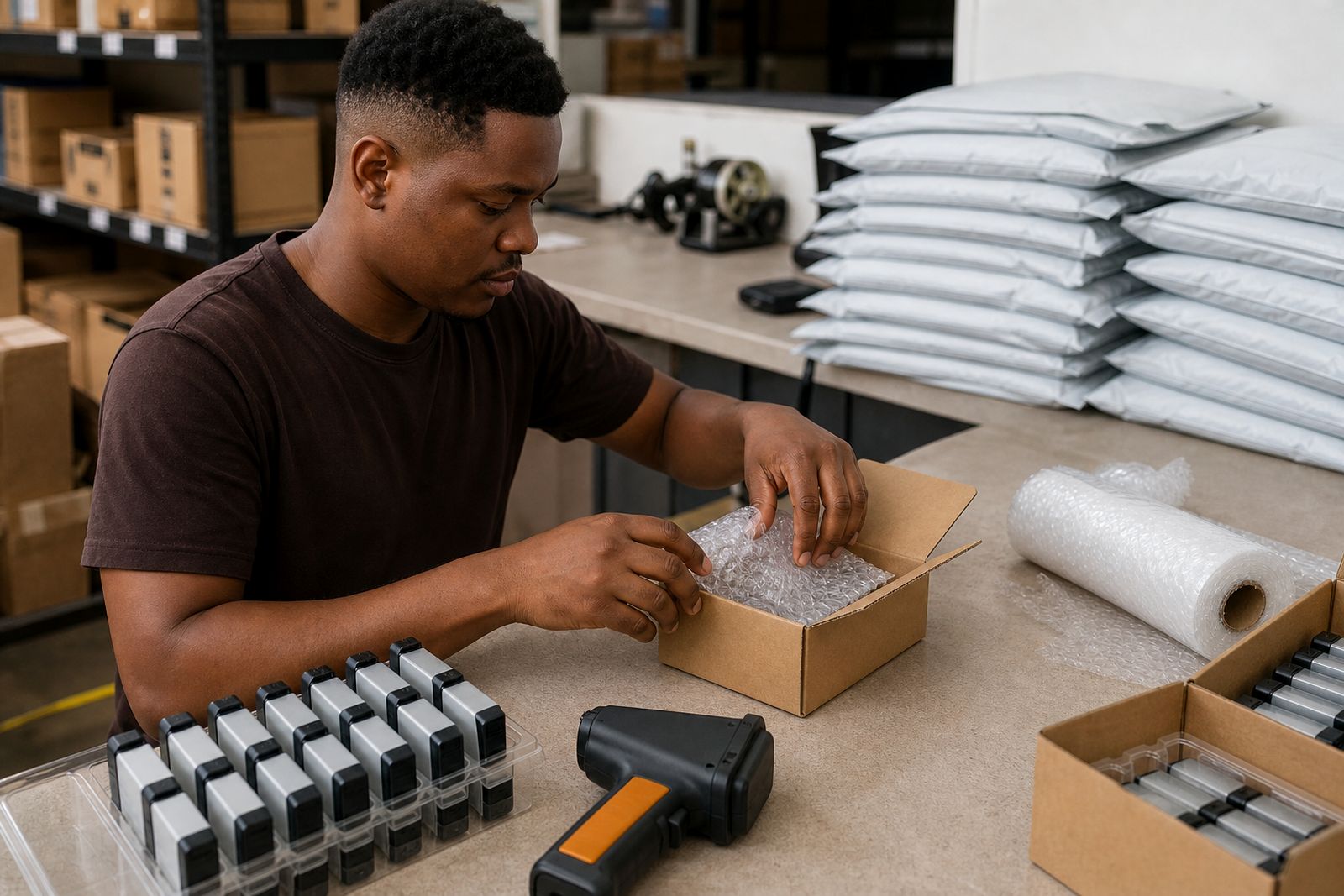
We also advise on sensible storage conditions. Avoid leaving cartridges in direct sun, near excessive heat, or loose in a vehicle where temperature swings are severe. In coastal areas around Durban, keep them sealed and capped properly so humidity does not add to handling problems.
How cartridge costs are worked out
Pricing is shaped by the cartridge type, ink type, colour, character size and compatibility requirement. A porous-surface cartridge for carton work is not costed in the same way as a quick-dry option for glossy film, and white or coloured inks for dark packs can differ from standard black. Large-character cartridges for cases and warehouse marks also sit in a different range because the application is different.
Where an operation uses more than one surface, the practical route is often to split the requirement rather than force one cartridge to do every job badly. We help customers weigh that up in plain terms. Couriering to factories, warehouses and packhouses in every province is arranged as part of the order, with the final total depending on the cartridge mix and delivery destination.
Support itself is tied to the cartridge requirement: compatibility checking, usage guidance and care notes form part of helping you buy the right item, not a separate repair service.
Aftercare once the cartridges are in use
Support does not stop at the point of ordering. Once the cartridges are on site, teams sometimes need help confirming that the chosen ink is behaving properly on the actual substrate in production conditions. A bottle line, a carton erector and a warehouse case station all create different handling conditions, so practical follow-up matters.
If printing starts to look faint, smeared or uneven, we help you work through the likely causes in order: substrate match, cartridge condition, nozzle cleanliness, storage practice and compatibility. In many cases the issue is simple, but it needs to be checked methodically. Where your operation uses more than one pack format, we can also help map which cartridge suits each one so operators are not swapping blindly between jobs.
For cartridge selection, compatibility guidance and care advice, send the details through our contact form and include the surface, code type and any print issue you are seeing.
What our Coding Ink customers say
Verified Google reviews
Questions we get asked
Can you help if I do not know which cartridge my coder uses?
Yes. Send the coder compatibility details if you have them, or share the cartridge reference and the surface you need to code. We can guide you toward the correct cartridge type from there.
Do you advise on ink for food or pharmaceutical packs?
We can give general guidance on matching ink type to the packaging surface and handling conditions. We do not make compliance claims, so any site-specific approval needs to be checked by your own quality team.
Can one cartridge type cover every surface in my plant?
Usually not. Carton, film, glass and metal behave differently, so using one cartridge across all of them often leads to poor print quality or rub-off. It is better to match the cartridge to each surface or pack group.
Tell us about the job
Send sizes, materials and where you are through our contact form, and we will come back with the practical options.
Open the contact form