

Coder and cartridge compatibility
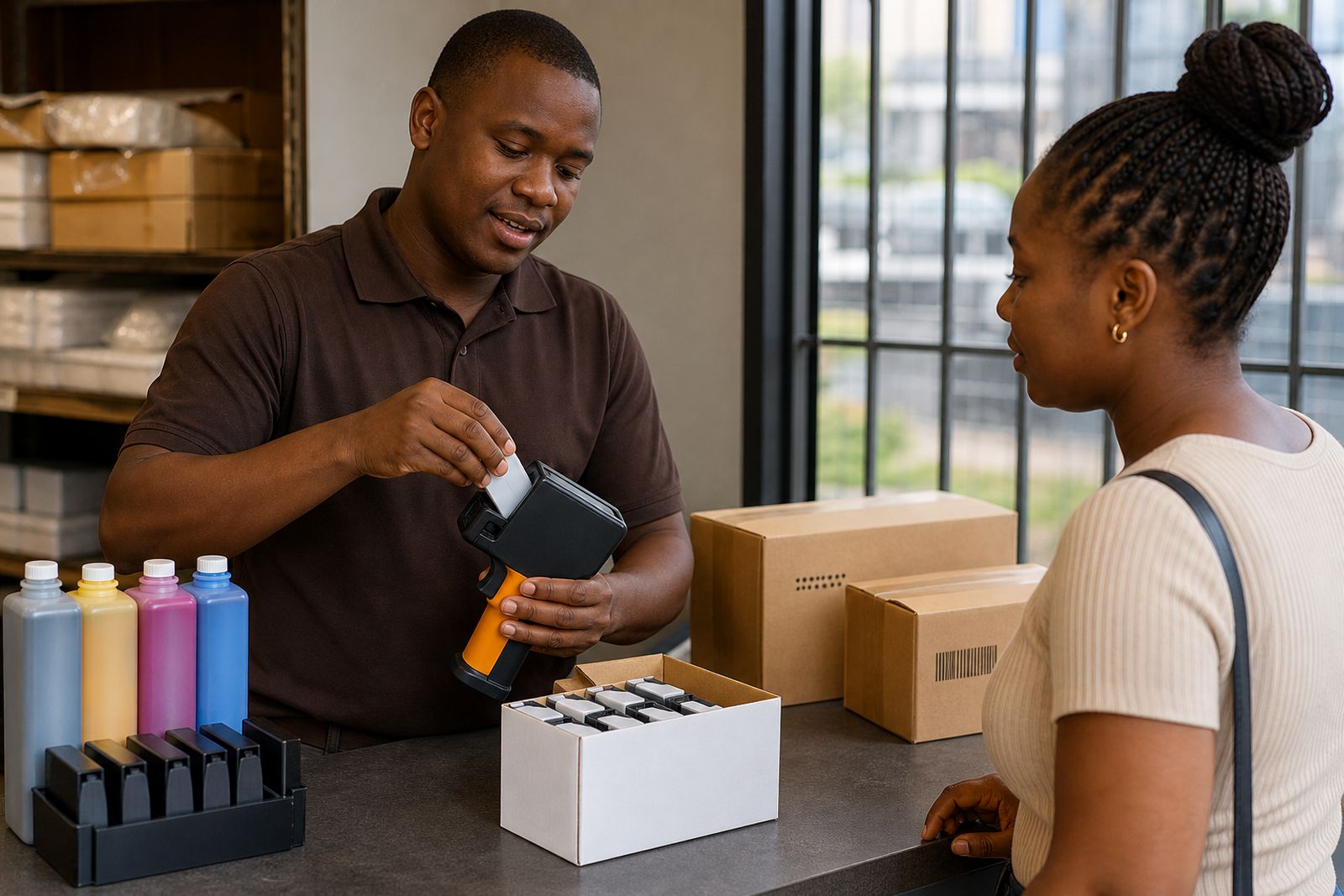
Not every handheld coder takes the same cartridge layout, chip type or ink family. We help you match the cartridge to your unit, your surface and the code you need to place on the product.
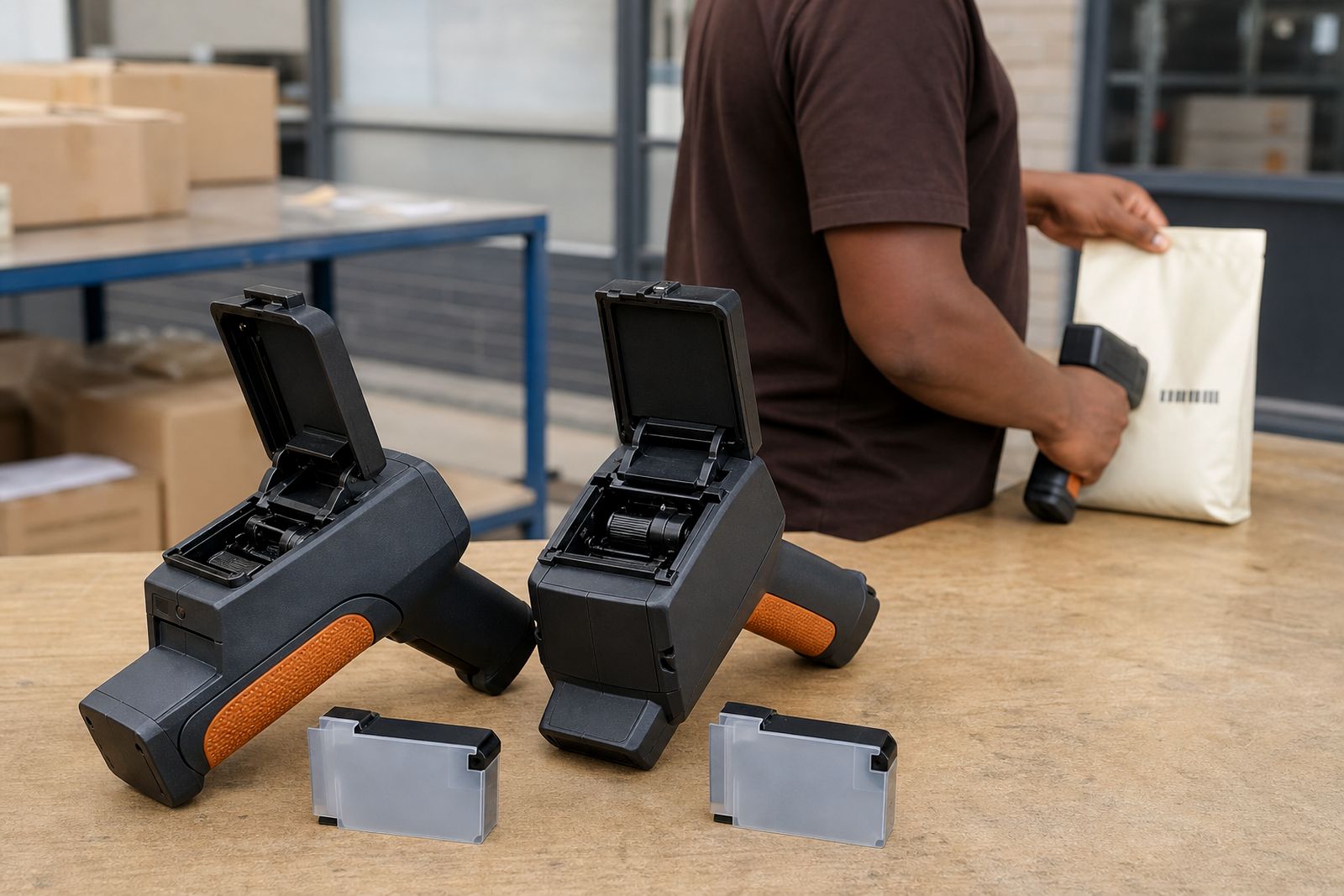
What this compatibility check covers
Compatibility is more than cartridge size. A handheld coder may look similar to another unit yet use a different electrical contact layout, nozzle position, ink setting or cartridge recognition method. We check the cartridge format your coder accepts and then narrow it down by the surface you are marking, the environment on the line and the kind of code you need to read clearly later.
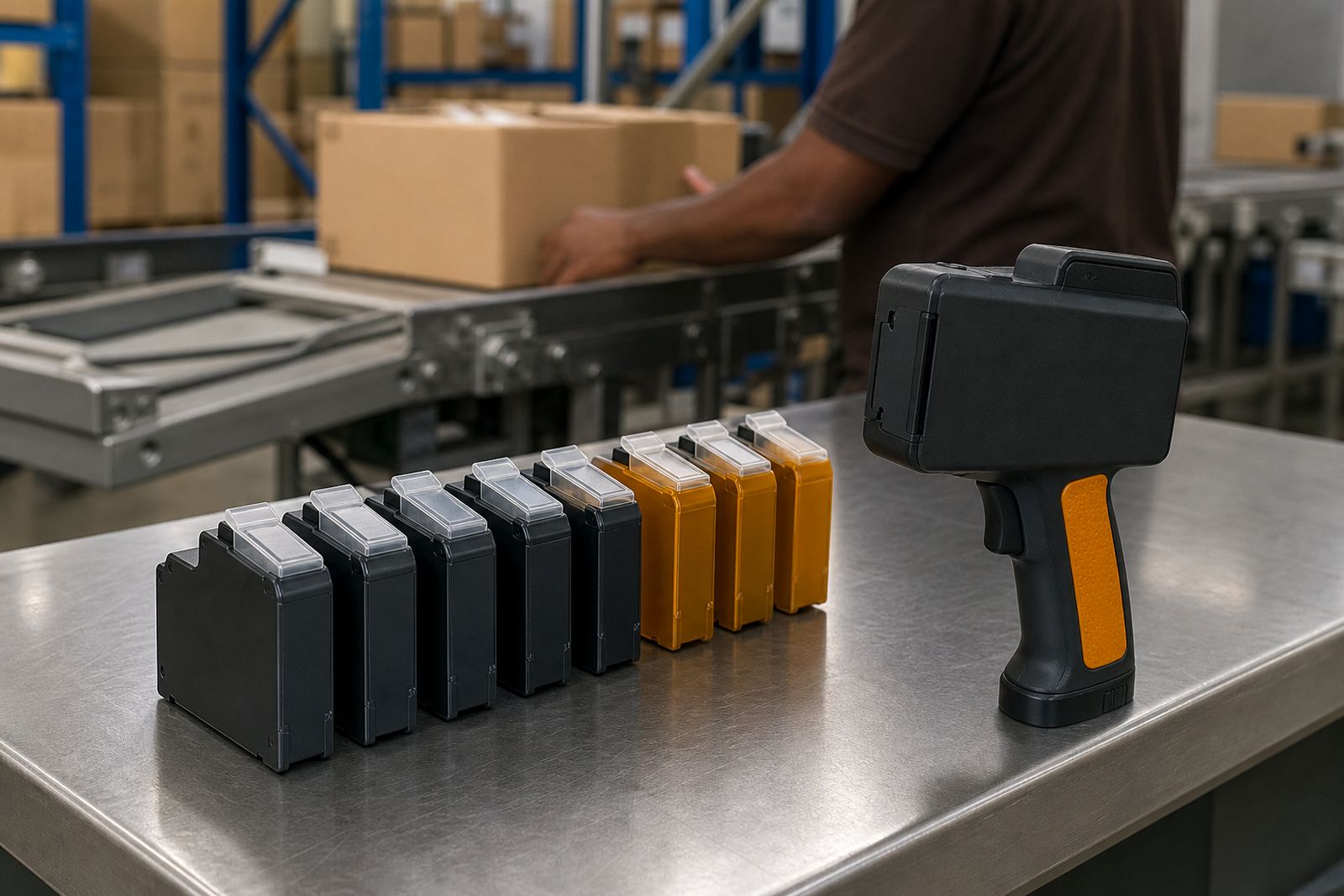
Our team helps with standard black cartridges, quick-dry solvent options for non-porous materials, water-based inks for absorbent stock, and white or coloured inks for darker packs. Where outer cases need bold text that can be seen at a distance we also advise on large-character cartridge options.
- Cartridge fit for the handheld coder body and latch position
- Ink type suited to porous or non-porous surfaces
- Colour choice for contrast on light or dark materials
- Code height and character visibility for cases and pallets
- Basic storage and nozzle-care guidance after delivery
Details we need from your side
The quickest way to identify the right cartridge is to compare your coder and current cartridge with clear photos and a short note on the material being coded. If there is no old cartridge available, a photo of the cartridge bay and the coder start-up screen usually helps. This avoids ordering a cartridge that physically fits poorly or does not read in the machine.
Please send the details through our contact form so we can look at the unit and the job together. A short sample of your code content helps too, especially if you need date marking, batch text, barcodes or larger case codes.
- Photos of the coder front, side and cartridge slot
- Any marking on the old cartridge or outer box
- Surface being coded, such as carton, plastic film, glass or metal
- Whether the surface is matte, glossy, coated or dusty
- Approximate code size and colour needed
- Town and delivery point for courier planning
How the matching process works
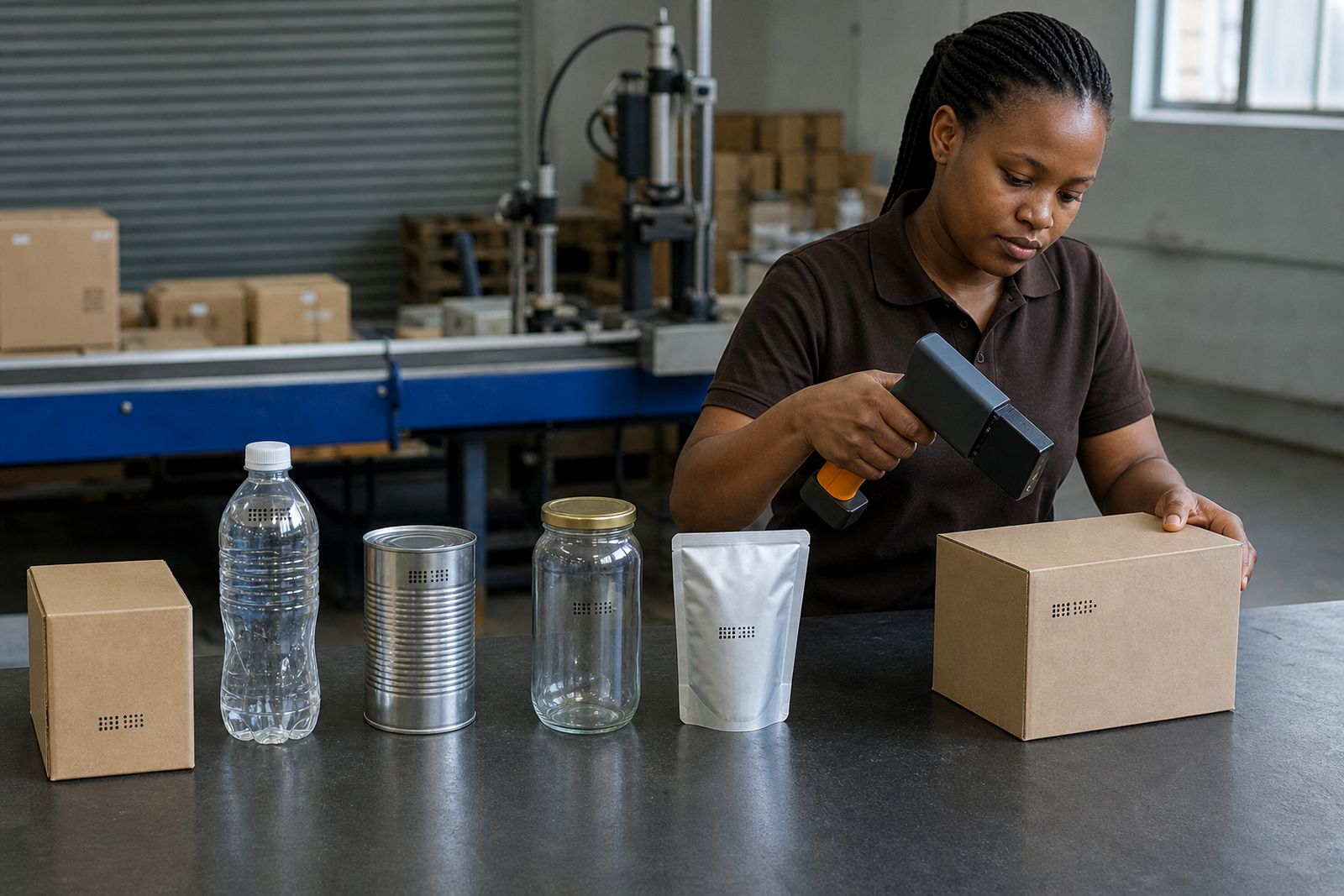
We start by checking the cartridge family your handheld coder accepts. After that we look at the print surface and whether the line needs a quick-dry ink for bottles, tubs, film or metal, or a water-based cartridge for cartons, paper labels and timber. On darker materials, contrast matters more than people expect, so we may point you to white or another visible colour where black would disappear.
Once the likely match is clear, we confirm the practical side of the job: line speed, handling after coding and storage conditions. In Durban heat and coastal humidity, some packed goods are moved while the code is still fresh, so surface choice and handling routine matter a lot. If your warehouse is inland and dry the ink behaviour can differ a bit, which is why surface notes are important.
After the check, we recommend the cartridge type and any care notes worth following on receipt. We do not sell or repair the coder itself, but we can still help you avoid a mismatch, and that saves a fair amount of frustration on site.
Typical cartridge and surface combinations
The table below is not a brand list or a guarantee for every machine, but it gives a useful starting point when you are deciding what to send us for checking. Small changes in coating, varnish or plastic finish can affect adhesion, so the final recommendation still depends on the exact job.
- Water-based cartridges are commonly used on cartons, paper sleeves, uncoated labels and wood.
- Quick-dry solvent cartridges are often chosen for plastics, shrink film, laminated pouches, metal tins and glass.
- White and coloured inks are used where dark packaging needs a readable code.
- Large-character cartridges suit outer cases, shipping cartons and warehouse marking where code height matters.
- Mixed packing lines may need more than one cartridge type if surfaces change through the day.
If you pack both absorbent cartons and glossy film on the same site, it is normal to keep separate cartridge types for each task. Trying to force one ink across every substrate usally leads to smudging, weak contrast or poor nozzle behaviour.
How cartridge pricing is worked out
Pricing depends on the cartridge family, ink type and colour rather than on the coder alone. Solvent formulations, specialist colours and larger character formats are usually costed differently from standard black cartridges for absorbent stock. Courier charges also vary by destination, parcel mix and whether the order is going to a factory, packhouse or warehouse with specific receiving hours.
Where a site uses several coders, we normally separate the cartridge requirement by machine and by surface so that the order stays clear. That makes it easier for your stores team to receive the correct items and keep the wrong cartridge off the line. If there are recurring jobs on plastics one week and cartons the next, note both when you send the enquiry, it helps.
Aftercare, storage and nozzle care
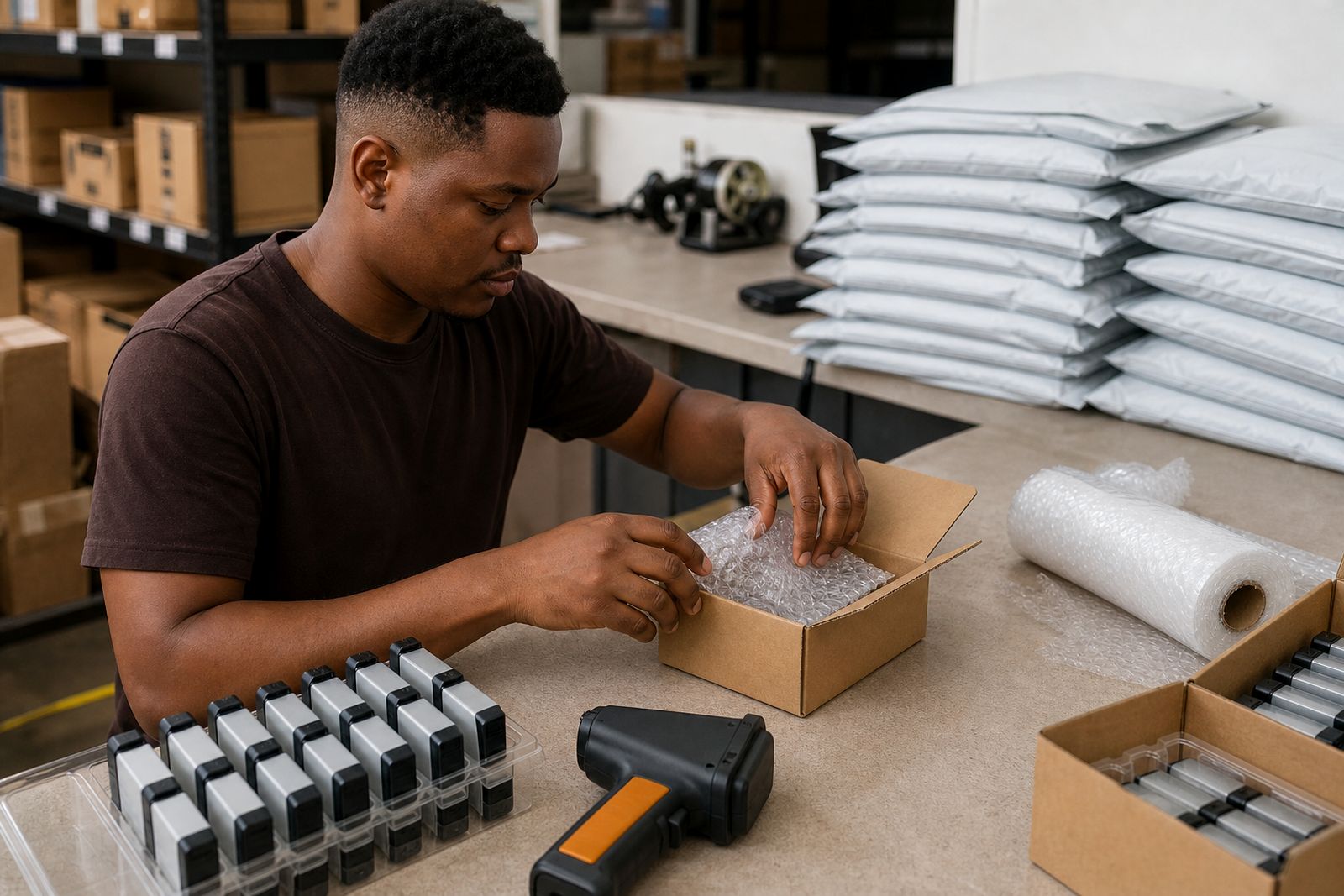
Once the right cartridge has been selected, good handling keeps the print quality steady. Cartridges should be stored sealed, upright where possible, and away from excessive heat. Leaving a cartridge uncapped on a bench between shifts can dry the nozzle face and cause weak lines or missing dots at the next start-up.
For sites running near the coast, wipe-down habits and storage conditions matter a little more because moisture and salt in the air can affect packaging surfaces and general housekeeping around the coder. Keep the contact points clean, follow the unit menu for cartridge changes and test on the real pack before a full run starts.
- Store unopened cartridges in a clean, dry area
- Fit the protective clip or cap when the cartridge is out of the coder
- Use the correct ink family for the surface instead of overdriving settings
- Print a short test after fitting a new cartridge
- Keep one labelled sample from each packing material for future checks
If a code turns faded or smudged after fitting a new cartridge, the issue is often the surface, handling routine or nozzle condition rather than the cartridge fit alone. We can help you work through those basics and point you to the nearest suitable ink option.
What our Coding Ink customers say
Verified Google reviews
Questions we get asked
Can you tell from photos whether my cartridge will fit?
Often yes. Clear photos of the coder, the cartridge bay and any old cartridge markings usually give enough detail to identify the correct cartridge family or rule out the wrong one.
I code both cartons and plastic film. Can one cartridge do both?
Sometimes, but not always well. Absorbent cartons and glossy film usually need different ink types, so we normally check each surface before recommending a cartridge.
Do you need my machine sent to Pinetown?
No. We work from photos, cartridge details and surface information, then courier the selected cartridges to your site if the match is confirmed.
Also worth a look
Tell us about the job
Send sizes, materials and where you are through our contact form, and we will come back with the practical options.
Open the contact form