

Choosing ink for your surface
The right cartridge depends on both the surface and the conditions around the line. This guide gives a quick, practical way to match ink to cartons, film, metal, glass, wood and shipping cases.
Start with the surface, not the colour
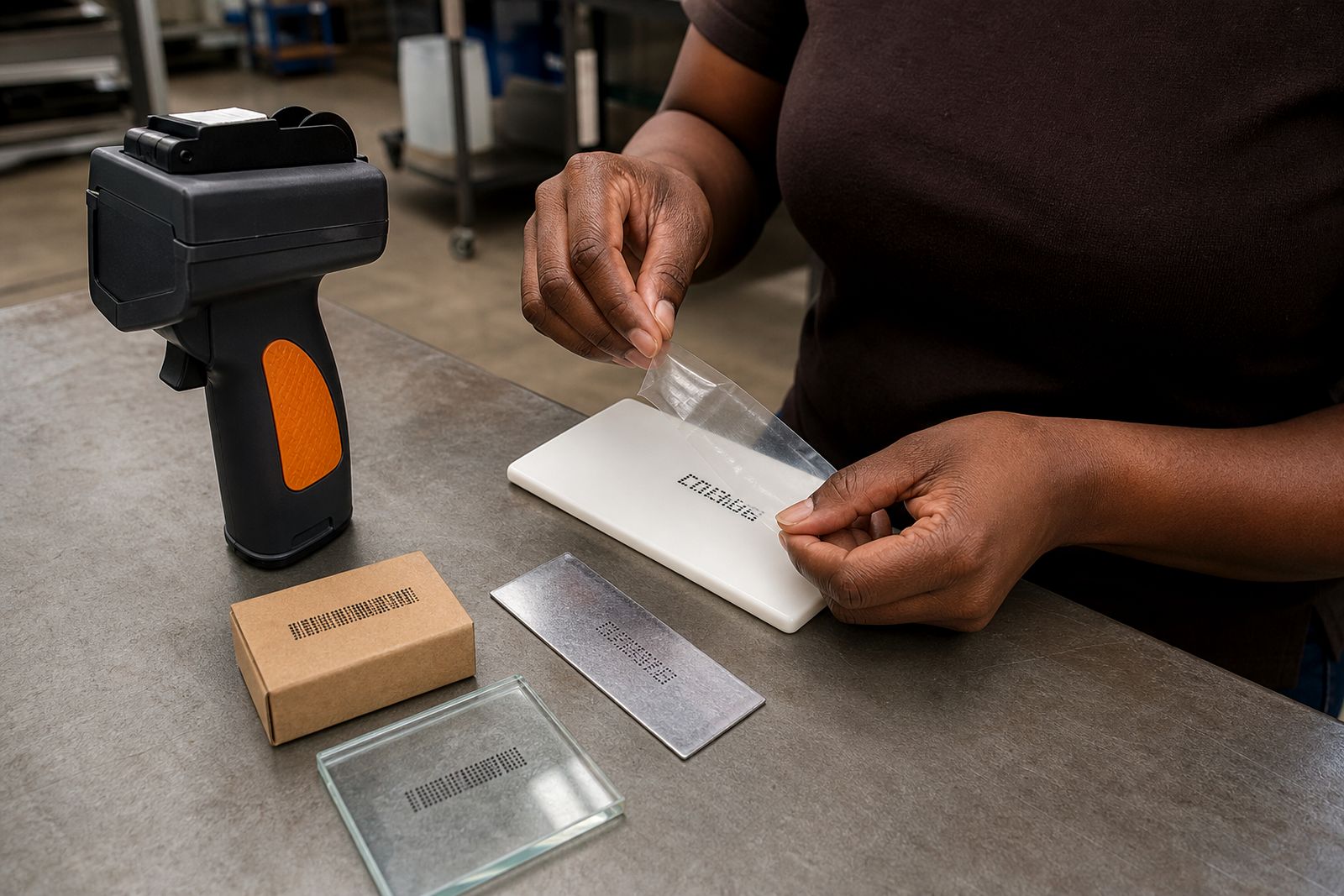
Most coding problems start with the material itself. A code that looks neat on an uncoated carton can wipe straight off a plastic pouch, while an ink that grips film nicely may feather into porous board. Before you choose black, white or a larger print height, identify whether the surface is porous or non-porous and whether it is smooth, coated, dusty or slightly damp from the packing area.
For handheld inkjet coders, the first split is usually simple. Water-based cartridges are commonly used on absorbent materials such as paper, cartons and unfinished wood. Quick-dry solvent cartridges are usually better for plastics, laminated film, metal, glass and other non-porous surfaces where the ink needs to bite before the item is stacked, sleeved or handled.
- Porous surfaces absorb ink into the material.
- Non-porous surfaces hold ink on top, so drying and adhesion matter more.
- Coated cartons can behave more like plastic than plain board.
- Dark surfaces may need white or another high-contrast colour.
If the material changes between shifts, treat each pack type as its own job. A brown shipper, a glossy label and a clear shrink film roll should not be grouped together just because they move on the same line.
Porous materials such as cartons, paper and wood
Cartons, paper labels and timber usually suit water-based cartridges, especially where the surface can absorb the ink line cleanly. These materials often give crisp text, batch codes and simple graphics without the spreading you get when the wrong cartridge is used. The finish still matters though. A recycled carton with open fibres behaves differently from a smooth coated case liner, and some varnished papers can reject water-based ink.
On cartons and paper, check whether the print needs to stay sharp after handling in the warehouse. If cases rub against each other on pallets, a stronger surface match may be needed. On wood, grain direction and sawdust can affect legibility more than operators expect, so a quick sample on the actual stock is worth doing.
- Use water-based cartridges for plain cartons and paper where ink can absorb.
- Test coated or waxy board separately, as it may need a different option.
- Brush off dust from timber before coding where possible.
- For larger outer-case marking, consider a large-character cartridge if standard print height looks too small.
Where customers code dispatch boxes in packhouses or stores, clear contrast is often more important than fine detail. A larger, bolder mark can read better from a few metres away even if the message is short.
Plastics, bottles, film, metal and glass need quicker grip
Non-porous materials generally need quick-dry solvent cartridges. This includes many plastic pouches, shrink film, rigid bottles, coated labels, tins, metal parts and glass jars. These surfaces do not absorb the ink, so the code must dry on the surface itself before the item is touched or packed. In busy Durban and Pinetown packing rooms, humidity can also affect how a mark settles, especially on cold bottles or smooth film.
On flexible film, movement matters as much as material. A soft pouch can dip under hand pressure, which affects print quality even when the ink choice is correct. On glass and metal, oil, condensation or fine dust can interfere with adhesion. If a code rubs off too easily, the issue may be contamination rather than the cartridge.
- Use quick-dry solvent cartridges for plastics, laminates, glass and metal.
- Check for condensation, release agents or oily residue before testing.
- Run a wipe test only after the mark has had a fair chance to settle.
- Sample on the exact bottle, pouch or lid in use, not a similar one from another line.
Where packs are sealed and immediately crated, the window for drying is short. That makes surface matching more important than colour preference, and it is one reason the same coder can perform very differently across two packaging formats.
Choosing white, coloured and large-character cartridges
Colour is not only about appearance. It affects contrast, readability and how easily a code is checked by line staff at a glance. On dark lids, black drums, green film or deep-coloured cartons, a white cartridge can make production codes far easier to read. Other coloured inks can also help where a line wants visual separation between shifts, product groups or warehouse destinations, but the main question is whether the mark stays legible under normal handling.
Large-character cartridges are usually chosen for outer cases, shipping marks and warehouse identification where codes need to be seen from further away. They are useful on corrugated boxes and similar transport packaging where a small character line would get lost among tape, straps and handling marks.
- Choose white or another high-contrast colour for dark substrates.
- Use standard character sizes for small packs where detail matters.
- Use large-character cartridges on shipping cases and bigger outer packaging.
- Check that the chosen cartridge matches the coder format before ordering.
If readability is the goal, a simpler message printed clearly is usually better than packing too much information into one small area.
A quick test routine before you standardise a cartridge
A short, consistent test can save a lot of wasted stock. Print on the actual material from the live line, then check the code after normal handling rather than only looking at the fresh mark. A pouch that passes on the bench may fail once it is heat-sealed, stacked and moved into a cage. Test where the code will really sit, not only where it is easiest to print.
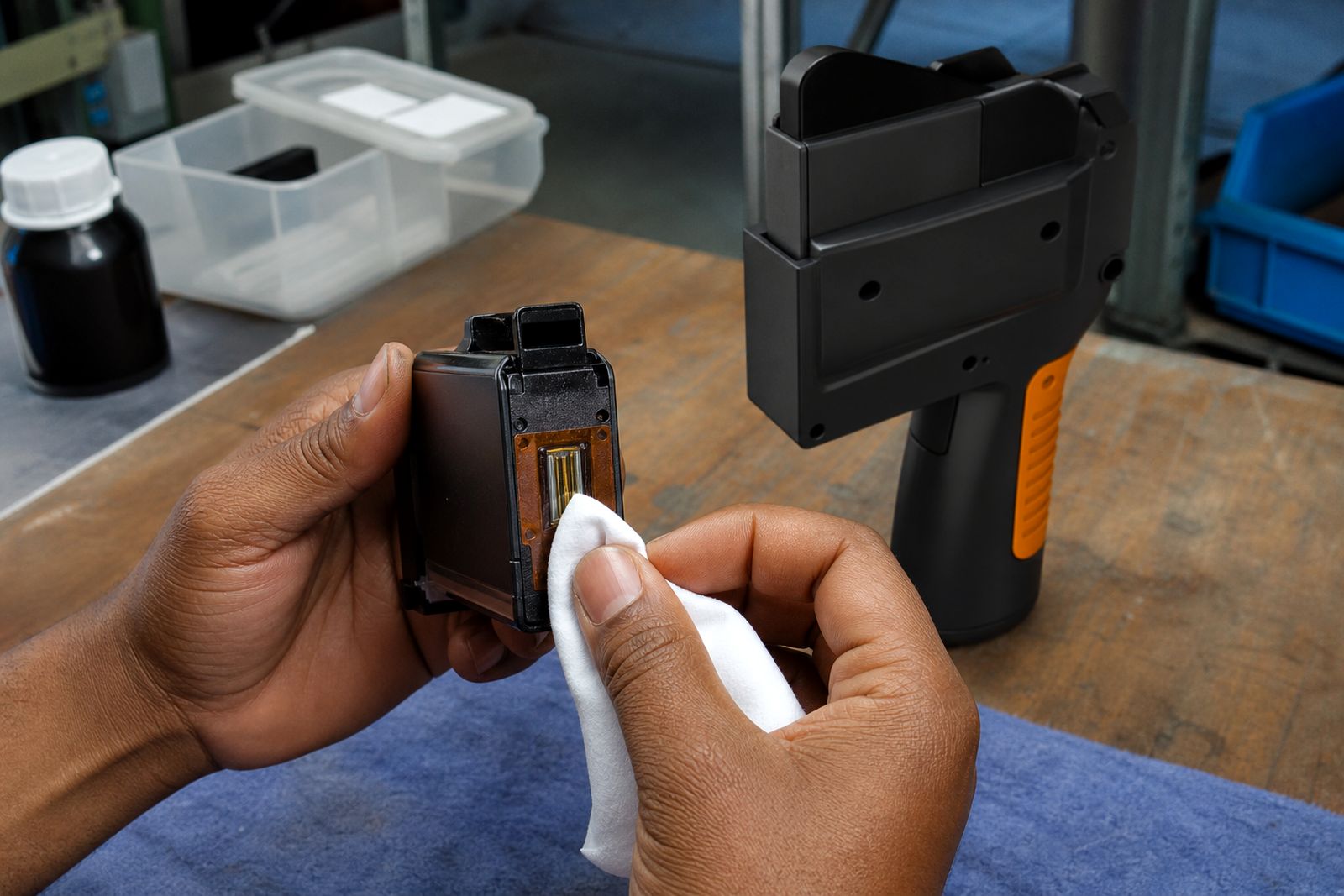
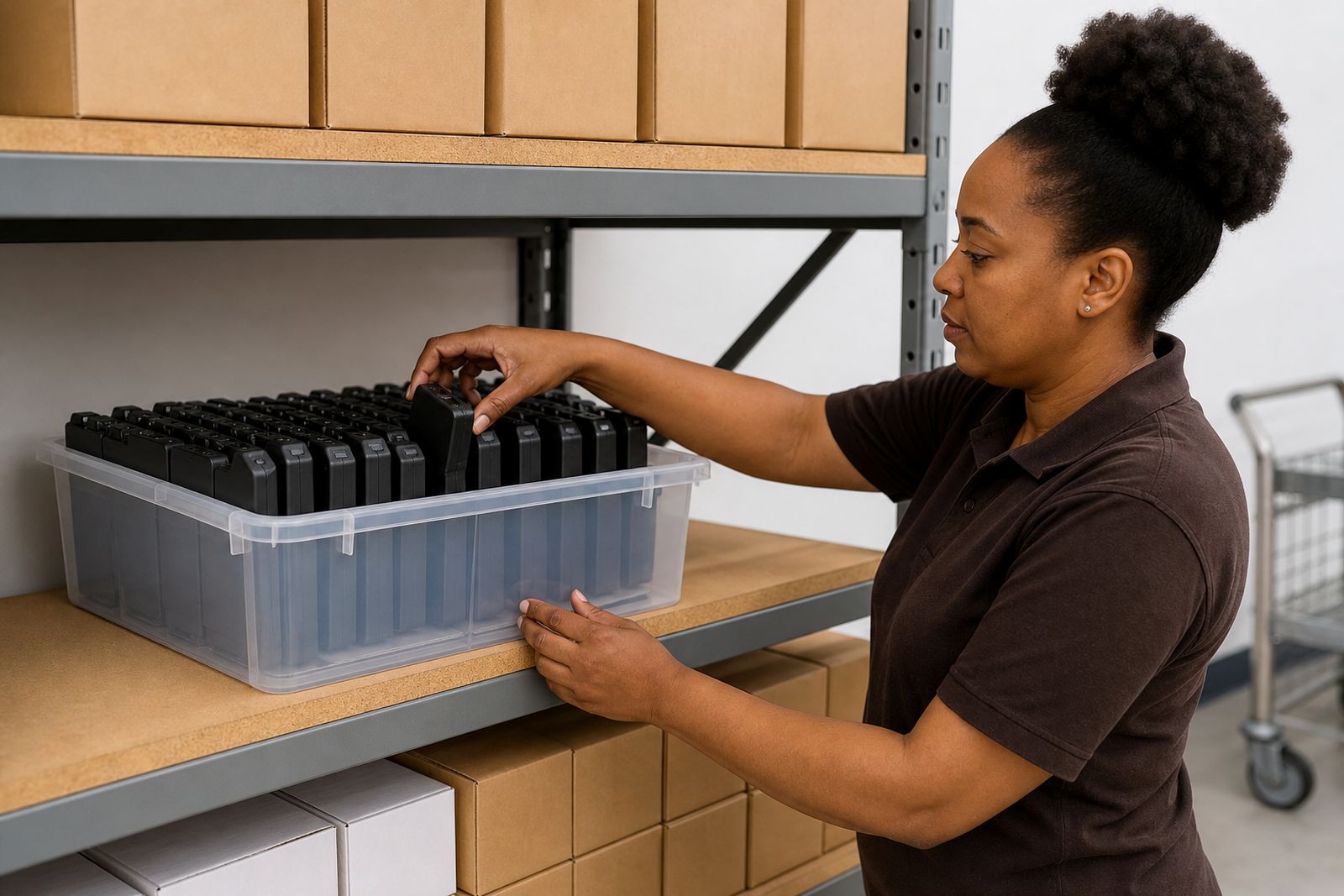
Look at edge sharpness, darkness or opacity, rub resistance and whether the code stays readable after packing. Keep the nozzle clean during the trial and store the cartridge properly between runs. Poor nozzle care can look like an ink problem when it is really a maintenance issue.
- Print on real production material from the current batch.
- Test after sealing, stacking or wrapping if that is part of the process.
- Compare readability under the actual light in the packing area.
- Note whether the surface is cold, humid, dusty or coated.
- Record the cartridge type that worked so the next order is simpler.
Where more than one surface is used in the same operation, keep samples of successful codes. A small file of real carton flaps, film offcuts and labelled jars can prevent mix-ups later on.
When to ask for cartridge matching help
If you are dealing with coated cartons, unusual films, dark containers or mixed packaging in one site, it helps to narrow the options before ordering. We supply cartridges and inks for handheld inkjet coders and can help match the cartridge type to the surface and the style of mark you need. That includes quick-dry solvent cartridges for non-porous materials, water-based cartridges for absorbent stock, white and coloured inks for contrast, and large-character options for transport cases.
We do not sell or repair the coders themselves, and we do not print for clients, but we can help customers work out which cartridge category suits the material in front of them. If you are unsure whether your substrate behaves like plain board, coated stock or plastic film, send the details through our contact form with the material description and where the code sits on the pack. A clear photo of the surface and a note on whether items are stacked straight away is often useful, even if the line setup is quite basic.
Orders are couriered from Pinetown to factories, packhouses and warehouses across South Africa, so the better the surface information, the easier it is to get the right cartridge into the job with less guesswork.
What our Coding Ink customers say
Verified Google reviews
Questions we get asked
Can one cartridge work on every surface?
Usually not. Cartons, paper and wood often need a different ink type from plastics, glass or metal. The safest route is to match the cartridge to the actual material and test on the pack used in production.
Is white ink only for appearance?
No. White ink is often chosen for contrast on dark substrates where black would be hard to read. The aim is a code that line staff and warehouse teams can spot clearly during normal handling.
Do you supply the handheld coders as well?
No. We supply inks and cartridges for handheld inkjet coders, help with cartridge matching and care advice, and courier orders nationwide, but we do not sell or repair the coders themselves.
Also worth a look
Tell us about the job
Send sizes, materials and where you are through our contact form, and we will come back with the practical options.
Open the contact form