

Storing ink cartridges
Cartridges last better when they are stored with a bit of routine, especially in heat and stop-start production. This guide covers the small habits that help keep print quality clean between shifts, transport runs and seasonal temperature swings.
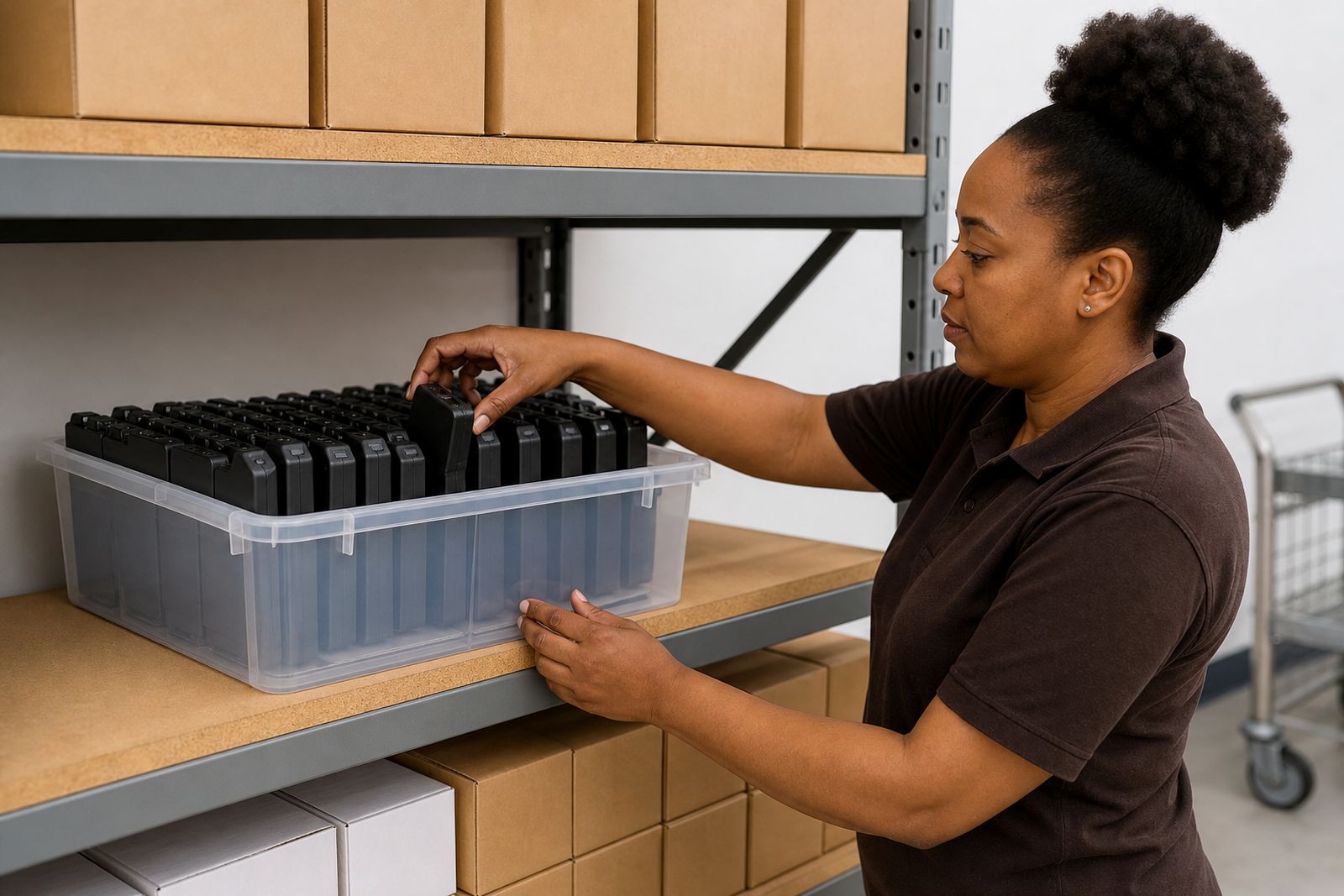
Start with a cool, steady storage spot
Heat is one of the quickest ways to shorten the useful life of an ink cartridge after it has been opened. In Pinetown and the Durban area, summer temperatures inside a packing room, container or warehouse office can climb fast, especially in the afternoon. A cartridge kept on a sunny windowsill, on top of a machine cover or inside a parked vehicle will usually give more trouble than one kept in a shaded cupboard with a steady room temperature.
Try to store cartridges in their protective packaging until they are needed. Once a carton has been opened, keep it away from dust, steam, washdown splash and direct sunlight. Avoid spots next to roller doors where hot air, damp sea air and grit move in and out all day.
- Choose a dry cupboard, shelf or cabinet away from direct sun.
- Keep cartons off concrete floors where moisture can collect.
- Do not leave cartridges in vehicles, dispatch cages or metal toolboxes.
- Separate opened stock from sealed stock so older units are used first.
Seal properly at the end of each shift
Many nozzle problems start after a cartridge has been left exposed overnight or over a weekend. Even where the ink is still usable, a dry film can form around the printhead area and lead to weak marks, broken characters or splatter on the next run. End-of-shift handling matters more than most operators expect.
Fit the protective clip, cap or cover supplied for that cartridge type as soon as it comes out of the coder. If the cartridge must stay installed in the coder, follow the normal shut-down steps for that unit and make sure the print area is protected. Leaving a partly used cartridge loose on a bench is one of the easiest ways to waste it.
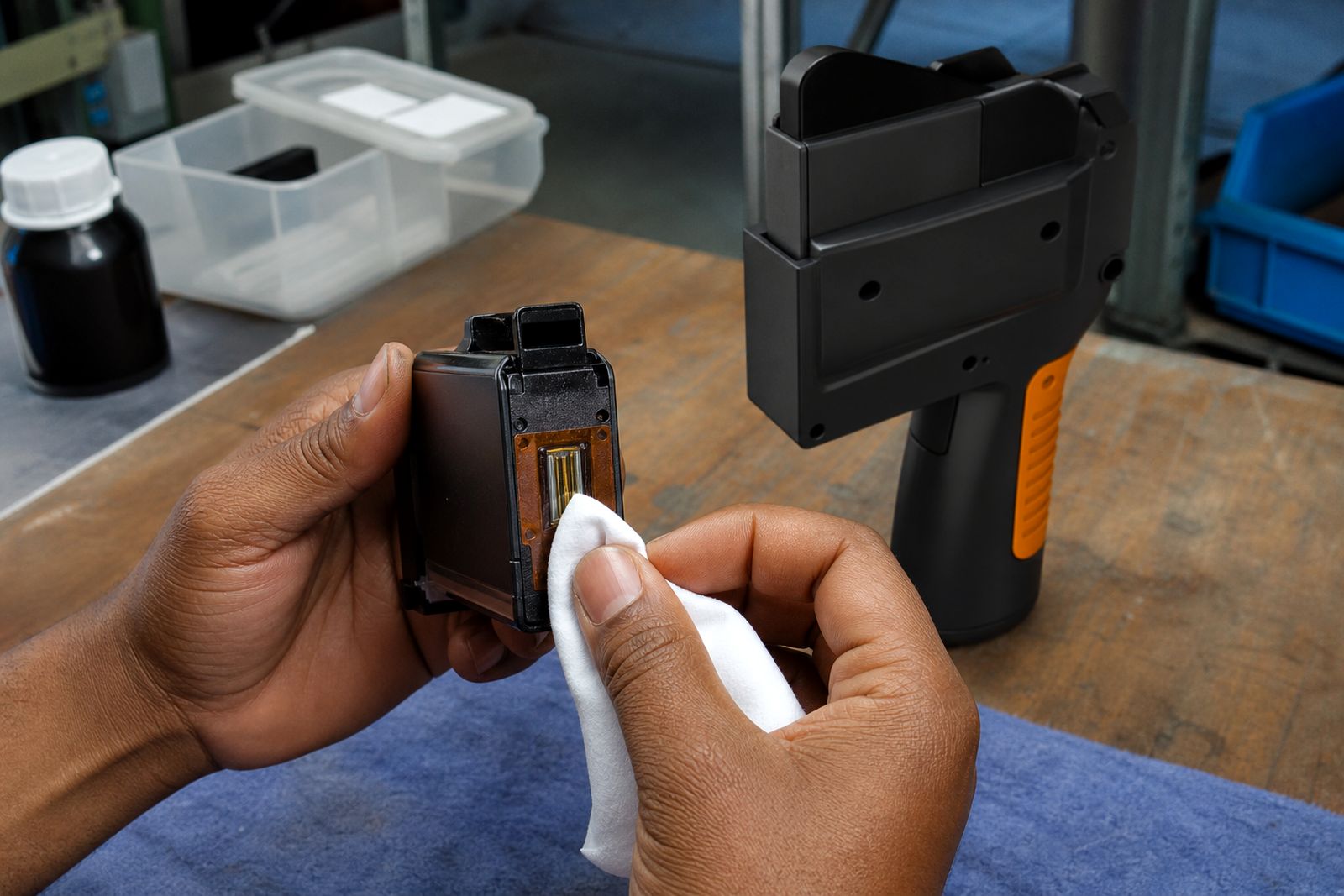
- Wipe only the outside where needed, using lint-free material.
- Refit the protective cover straight after removal.
- Store partly used cartridges upright if that matches the cartridge design.
- Return the cartridge to its box or clean sealed container between runs.
A small label on the box helps too. Note whether the cartridge is opened, partly used or reserved for a certain surface. It sounds basic but on a busy line this prevents mixing carton ink with plastic-surface ink and saves a lot of guesswork.
Different inks need different care
Not every cartridge behaves the same in storage. Quick-dry solvent cartridges for plastics, film, metal and glass are often more sensitive to poor sealing because the formulation is made to flash off faster on non-porous surfaces. Water-based cartridges for cartons, paper and wood tend to be more forgiving, but they still suffer if the nozzle face is left dirty or exposed to moving air for too long.
White and coloured inks also need careful handling because pigment can settle when a cartridge stands unused for a period. Large-character cartridges used on shipping cases should be stored just as neatly as smaller coding cartridges, even if the print itself is bolder and more forgiving.
- Keep quick-dry cartridges tightly sealed when not in use.
- Protect water-based cartridges from dust and fibre in carton rooms.
- Handle white and coloured inks gently to avoid contamination at the nozzle.
- Do not swap cartridges between incompatible coders or holders.
If you are unsure whether a cartridge is suited to plastic film, coated board, glass or corrugated outers, rather check before opening more stock. We can help match the cartridge to the coder and the surface through our contact form.
Heat, humidity and courier movement
South African conditions vary a lot from one province to another. Coastal humidity can affect packaging rooms near Durban, while inland sites may see very warm afternoons and colder mornings. Cartridges moved by courier also go through handling bays, delivery vans and warehouse shelves, so it makes sense to settle them properly once they arrive.
When a delivery reaches your factory, packhouse or warehouse, bring the cartons indoors instead of leaving them at goods receiving for the whole day. Let them rest in a normal storage area before use if they have travelled in very hot or cold conditions. This helps reduce condensation around the pack and lowers the chance of moisture finding its way into the wrong place.
- Move delivered stock out of direct sun as soon as practical.
- Do not open outer packs in a dusty yard or loading zone.
- Let stock stand in the storeroom before fitting it to the coder.
- Keep heavy items from crushing cartridge cartons on the shelf.
If your site runs near wash bays, chilled rooms or open dispatch doors, choose a storage spot farther inside the building. That small move often prevents damp labels, wet cartons and nozzle contamination, and it costs nothing.
A weekly check that prevents wasted cartridges
You do not need a complicated system to keep cartridge storage under control. A short weekly check by the line supervisor, store controller or operator is often enough. The aim is to catch the ordinary problems early: opened boxes with no covers, dust around the nozzle area, mixed cartridge types and stock sitting in the wrong place.
Set aside a few minutes each week and walk the shelf. Remove empty boxes, close loose packaging and separate clean stock from anything that needs inspection. If a cartridge has leaked inside the box or the nozzle area looks badly fouled, keep it aside rather than putting it straight back into production where it may mark a full batch.
- Check that all opened cartridges still have their caps or clips.
- Look for sun exposure, heat build-up or damp on the storage shelf.
- Make sure carton inks and non-porous surface inks are not mixed.
- Rotate older opened stock ahead of newly opened units.
- Keep the shelf clean of fibre, glue dust and torn packaging.
These checks are not glamorous, but they stop a lot of print trouble before it reaches the line. One untidy shelf can cause faded date codes, messy lot marks and unnecessary stoppages later in the week.
When a stored cartridge does not print cleanly
A cartridge that has been stored badly does not always need to be thrown away immediately. Sometimes the problem is only dried residue on the nozzle face or the wrong cartridge having been fitted to the surface. Start with the basics. Confirm the cartridge type, inspect the nozzle area and look at the storage condition it came from.
If the mark is faint, broken or smudged after storage, avoid heavy wiping or poking around the printhead. Follow normal nozzle-care steps for that cartridge type and test on the actual substrate, not on any random scrap lying nearby. Film, coated board, glass and corrugated each show ink differently, so the test surface matters a lot. If several cartridges from the same shelf show the same issue there is probbly a storage problem to fix, not only a printing problem.
Where print quality keeps drifting after breaks or shift changes, review how cartridges are capped, where they are being kept and whether heat is building up around the shelf. Storage is often the missing piece when coding faults seem to appear for no obvious reason.
What our Coding Ink customers say
Verified Google reviews
Questions we get asked
Can I keep a partly used cartridge in the coder overnight?
That depends on the coder setup and whether the print area can be protected properly. If a cartridge is removed, fit its cover straight away and store it neatly rather than leaving it exposed on a bench.
Is it fine to store cartridges in a warehouse near the roller door?
It is better to use an inside shelf or cupboard. Roller-door areas bring dust, damp air and temperature swings that can shorten cartridge life and dirty the nozzle area.
Do white and coloured inks need special storage?
They benefit from careful sealing and clean handling, especially where pigment settling or nozzle contamination may affect print quality. Keep them boxed, capped and away from heat and direct sun.
Tell us about the job
Send sizes, materials and where you are through our contact form, and we will come back with the practical options.
Open the contact form