

White and coloured inks
White and coloured inks are used when black codes disappear on dark or strongly coloured packaging. We supply cartridges for handheld inkjet coders that need clear, readable marks on bags, bottles, cartons, coated packs and shipping units.
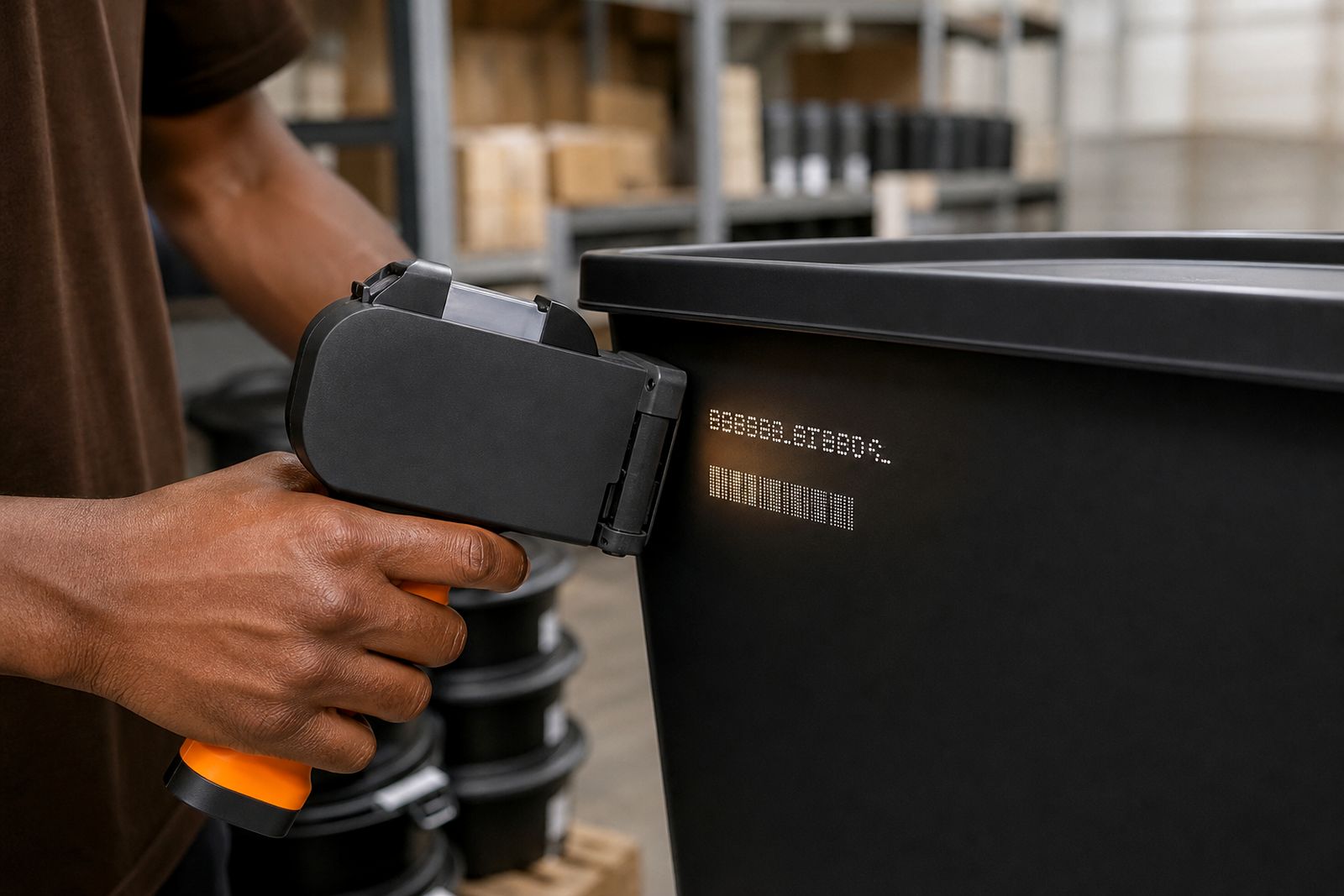
When a standard black code is not enough
Dark films, black cartons, tinted bottles and coloured labels can make ordinary codes hard to read on the line. White and coloured inks solve that by giving stronger contrast, so batch numbers, dates, shift codes and shipping details stay visible without the operator having to overspray or print twice.
These cartridges are used in handheld inkjet coders where the surface needs a mark that stands out from the packaing colour. In food packing rooms, warehouse dispatch areas and small production lines, that often means white on black material, or another colour that separates properly from the background.
- White inks for black, navy, dark green and other deep substrates.
- Coloured inks for visual coding, line separation or colour matched identification marks.
- Options for porous and non-porous surfaces, depending on the material being coded.
- Suitable for batch coding, use-by information, carton IDs and dispatch marks.
Ink options and the limits that matter on site
Not every coloured cartridge suits every job. Some are made for absorbent materials such as cartons and paper labels, while others are formulated for plastics, coated film, metal and glass. The main limit is the surface itself, followed by storage conditions, rub exposure and how quickly the packed item moves after coding.
For dark non-porous packs, a quick-dry pigmented cartridge is often the better route. For porous stock, a water-based coloured cartridge may give a sharper edge and simpler handling. Large filled solids and heavy graphics are usually not the best use case for handheld coding cartridges; they are better suited to short text, variable data and compact marks.
- Typical print content includes dates, batches, lot numbers, simple logos and carton text.
- Fine detail depends on the coder settings, nozzle condition and the texture of the substrate.
- Very oily, dusty or wet surfaces can weaken adhesion and legibility.
- High-abrasion handling may require testing before a full roll-out.
Surfaces that suit these inks, and where they can struggle
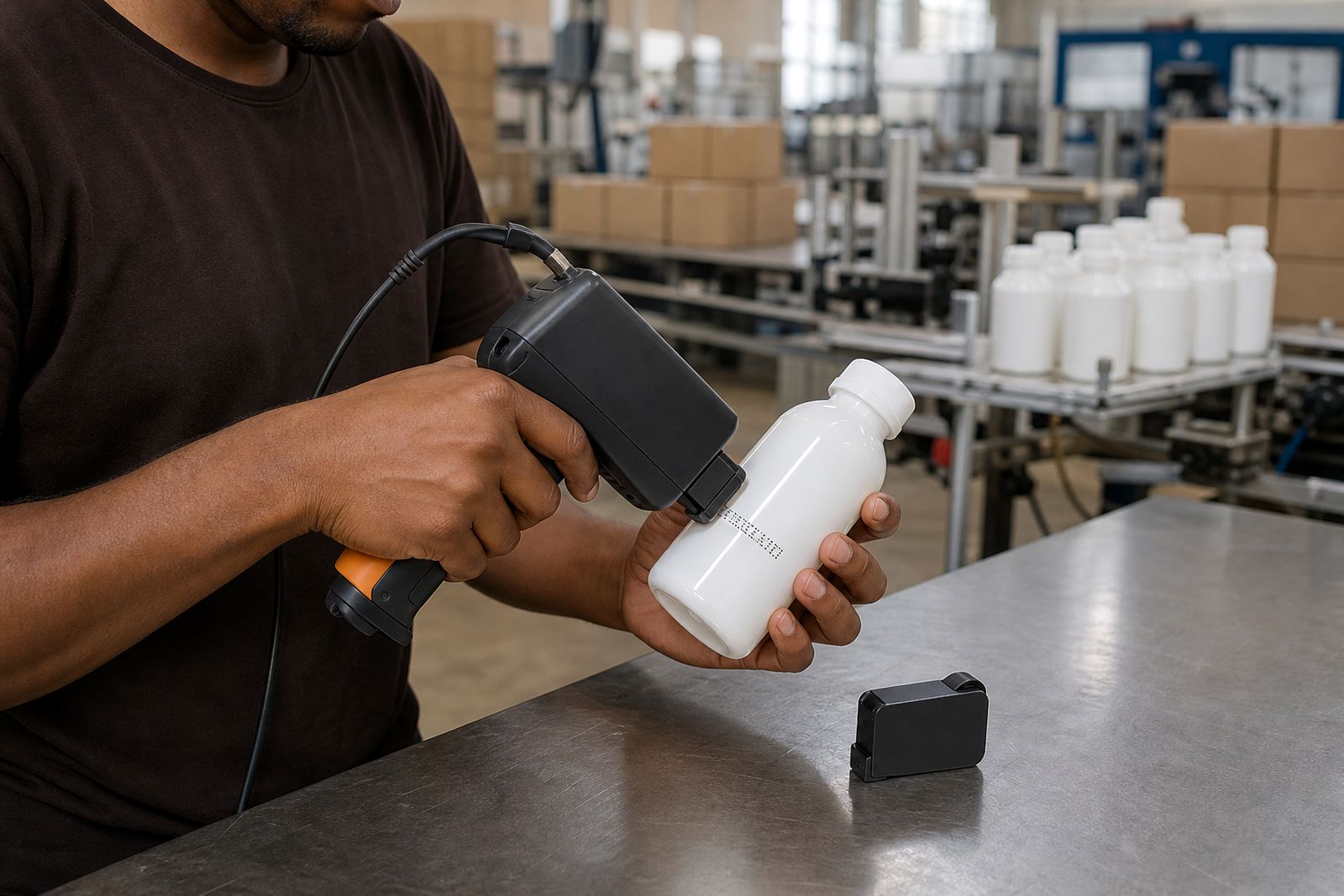
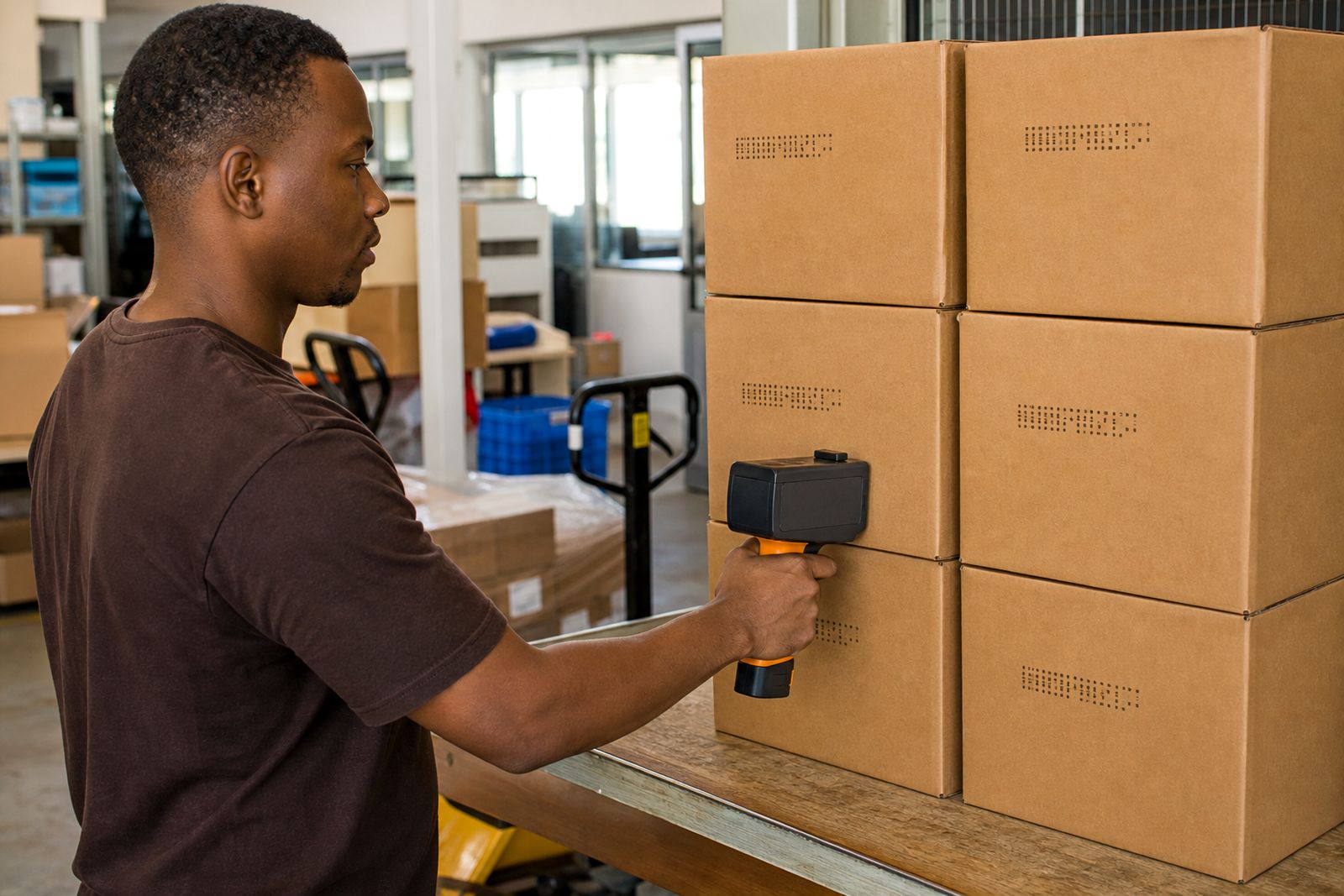
White and coloured cartridges are regularly used on shrink film, plastic tubs, laminated bags, coated cartons, painted metal, glass containers and outer cases. On smooth black packs they can be a practical answer where a pale code needs to be seen quickly by warehouse staff or production operators from a few metres away.
They are less suitable on surfaces that shed dust, carry condensation, or flex so much that the dried mark cracks or scuffs during handling. Rough timber can also give a broken print if the character height is small. If your line uses cold-filled bottles near the coast, humidity and surface moisture need to be taken seriously because even a good ink can struggle on a sweating bottle.
We do not sell the coders themselves, so the best results come from matching the cartridge to the handheld unit you already use and the substrate you need to code.
Compatibility, fitting and working conditions
Before you order, we need to know which handheld coder you are using, the cartridge type it accepts and the surface being marked. That stops mismatches and helps us point you to the right ink family. White and coloured inks can behave differently from standard black inks because pigment load, opacity and drying behaviour are not the same.
On site, the coder should be kept clean and the cartridge fitted correctly so the nozzle face is protected when not in use. Operators should test print on the actual pack, not only on a sample sheet from the office, because the production substrate often has different coatings or slip additives.
- Tell us whether the surface is porous or non-porous.
- Tell us if the pack is black, metallic, transparent or strongly coloured.
- Tell us what content you print, such as date, batch or shipping text.
- Tell us if the coded item is handled straight away, stacked, wrapped or chilled.
- Tell us your province and delivery town so we can arrange courier supply.
Storage and nozzle care for pigmented cartridges
Pigmented inks need sensible handling. Cartridges should be stored sealed, upright where applicable and away from excessive heat, direct sun and dirty production shelves. In Pinetown and across the Durban side of KZN, warm storerooms can shorten usable cartridge condition if stock is left in a hot dispatch area for too long.
The nozzle face should be wiped only with the correct lint-free material and only when needed. Heavy rubbing, paper towel fibres and dried residue can affect print quality. If a coder sits unused between runs, cap or park the cartridge properly according to the unit setup, otherwise the next print can look faint or broken.
- Keep cartridges in clean storage, not loose in a dusty toolbox.
- Avoid leaving opened units in direct heat for long periods.
- Check test prints before a production run starts.
- Do not swap between incompatible ink types without checking cartridge suitability first.
What to send with your enquiry
A good enquiry gives us enough detail to guide the cartridge choice without guesswork. If you are moving from black ink to white or another colour, mention what is not working now, whether it is poor contrast, smudging, fading or weak adhesion on the pack surface. A quick photo of the substrate and an example code can help, but the main thing is the material description and the coder model or cartridge reference.
Use our contact form with the surface type, pack colour, print content, expected character size and delivery town. We courier ink cartridges to factories, packhouses and warehouses in every province, and we can help narrow the choice for cartons, plastics, bottles, film, metal, glass and outer cases.
What our Coding Ink customers say
Verified Google reviews
Questions we get asked
Can white ink print on black plastic packaging?
Yes, if the cartridge is matched to a non-porous black plastic surface and the coder accepts that cartridge type. Surface finish, handling and moisture still matter, so the pack material should be checked first.
Are coloured inks suitable for food and pharmaceutical packs?
They are used on outer packaging and coded packs in those sectors, but the right choice depends on the substrate and production conditions. If you work with sensitive products, tell us the pack type and where the code sits on the item.
Do you sell handheld coders as well?
No. We supply inks and cartridges for handheld inkjet coders, help with compatibility guidance, and courier orders nationwide.
Also worth a look

Tell us about the job
Send sizes, materials and where you are through our contact form, and we will come back with the practical options.
Open the contact form