

Coding cartons, paper and wood
Cartons, paper labels and timber take ink very differently from plastic and glass. On porous stock, the cartridge choice and the condition of the surface matter more than most packing lines expect.
Porous stock absorbs first and asks questions later
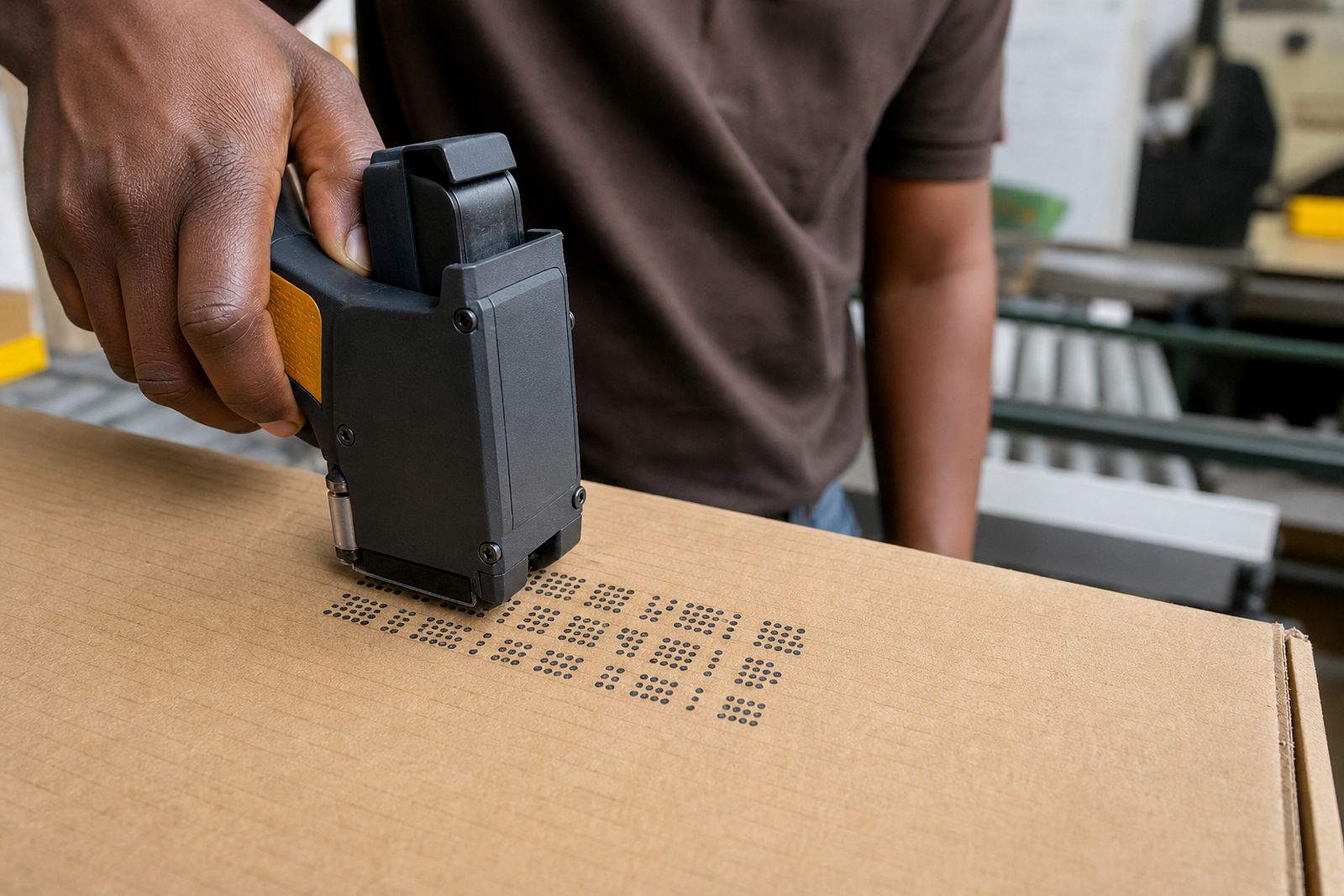
Paper fibres, corrugated cartons and raw wood pull ink inward as soon as the print lands. That is useful because the mark keys into the surface instead of skating on top, but it also means the code can spread if the cartridge is too wet for the grade of stock. A date code on a smooth folding carton behaves differently from the same code on a recycled shipper with a loose dusty face.
For most porous materials, water-based cartridges are the normal starting point. They suit cartons, paper sleeves, kraft bags, labels and many untreated wooden surfaces where you want dark readable text without solvent smell around the packing bench. The print tends to look natural on fibre-based stock and, on the right board, can hold sharp edges on smaller characters.
The catch is that porous does not always mean easy. Some cartons have coatings, waxy patches or a compressed outer liner that limits absorption. A timber board can vary from one plank to the next, and sawdust on the face will break the print. When a code looks faint or feathery, it is often the stock talking back rather than a cartridge fault.
Where water-based cartridges fit best
Water-based ink is usually the sensible option when the surface has enough absorbency to take a clean impression. In South African packhouses and warehouses, that commonly means outer cases, shelf-ready cartons, paper labels, document sleeves and wooden crates. If the material soaks up moisture evenly, a water-based cartridge can give a neat dark code with good contrast.
- Corrugated outers for food, beverage and general distribution.
- Paper bags, tags and carton sleeves used in dry goods packing.
- Uncoated labels and inserts moving through a manual packing station.
- Wooden boxes, pallets and crate components with a reasonably smooth face.
Large solid logos or very heavy coverage can behave differently from a short line of text, so the artwork matters. A simple batch code, date and line reference often prints cleaner than a dense block on soft carton. If your coder allows height and darkness adjustments, small changes there can help keep characters crisp without over-wetting the board.
When the substrate is mixed, for example a carton with glossy tape across one panel, test the actual print area rather than the carton in general. The same case can be absorbent on one side and resistant on another, which is where people lose half a morning chasing the wrong setting.
Cartons are not all the same on a packing floor
A practical example from a workshop near Pinetown shows how much the board grade matters. The team was coding transit cartons for a dry goods line using a handheld coder at the end of sealing. On the first stack, the code looked bold and tidy. On the next pallet, from a different carton batch, the text spread slightly and the smaller digits started closing up.
The issue was not the operator or the coder. One batch had a tighter outer liner, while the other had a softer more absorbent face with a bit of carton dust from die cutting. A quick wipe of the print area and a lighter pass improved the result, and moving the code away from a heavily creased panel helped as well. Nothing fancy, just paying attention to the board in front of the operator.
- Print on a flat panel where possible, not over a fold or deep score line.
- Keep clear of taped seams, glue squeeze-out and dusty cut edges.
- Check each new carton batch before a long run, even if the size is unchanged.
- Use a simple message layout if the board is soft and absorbent.
That same approach works well for paper sleeves and labels. Run a few samples at production speed, leave them aside briefly, then rub lightly to see whether the ink has settled properly into the fibre. If the mark looks woolly from the start, the stock and cartridge combination needs a closer look.
Wood needs a flatter face than people expect
Wooden crates and pallet components are often described as easy because they are porous, but the real challenge is texture. Grain, knots, resin streaks and rough sawn faces interrupt the print path. The cartridge may be correct and still produce a broken code if the nozzle passes over ridges and hollows instead of a reasonably even section.
On untreated timber, choose the smoothest practical area and keep the print away from cracked edges. A dark water-based code can work well on pale wood, especially for batch references, destination marks and handling identifiers. Very rough timber may need larger characters simply because the surface is uneven, not because the ink is weak.
Moisture in stored timber also changes the result. Boards kept in a humid coastal store can take ink differently from timber stacked in a drier inland warehouse. If a code starts looking patchy after weather shifts, do not assume the cartridge has failed. Check the wood itself and the amount of dust sitting on the face.
- Brush or wipe away loose sawdust before coding.
- Avoid resin-heavy spots where the surface turns shiny.
- Use larger text on rough crate timber.
- Test the actual board species if the print matters for traceability.
Nozzle care matters more on fibre dust and carton fluff
Porous substrates shed fibres. Corrugated cases drop dust, paper labels release fluff at cut edges and timber leaves fine particles that can collect around the print area. That does not mean the cartridge is unsuitable, only that the nozzle needs sensible handling between runs. A dirty faceplate can drag across the stock and leave a weak or streaked code.
Store cartridges sealed when they are not in use, and keep spare stock out of direct heat in the workshop or dispatch office. In Durban humidity, packaging can soften and dust sticks to everything a bit faster, so a tidy storage spot helps. Before a shift starts, inspect the cartridge contacts and nozzle area carefully and clean only in the way recommended for that cartridge type.
If an operator keeps pressing harder to make a faded mark darker, the print often gets worse. A handheld coder should pass evenly across the surface. Too much pressure, especially on carton, can scrape dust into the nozzle area and turn a clean line into a messy one.
Matching the cartridge to the job before cartons pile up
The best time to sort out cartridge choice is before the coded stock reaches dispatch. Tell us what material you are marking, whether the print area is plain paper, corrugated board or wood, and whether the stock has any coating, wax, tape or dust issues. We can help you narrow down the cartridge style for the surface and the kind of code you need to place.
We supply inks and cartridges for handheld inkjet coders and courier nationwide from Pinetown to factories, packhouses and warehouses in every province. We do not sell the coders themselves and we do not handle printing on your behalf, but we can help with cartridge matching, storage guidance and practical notes on nozzle care. If you are weighing up cartons against labels or raw wood against a coated sleeve, send the job details through our contact form so the discussion starts with the real substrate rather than guesswork.
What our Coding Ink customers say
Verified Google reviews
Questions we get asked
Can one cartridge handle both cartons and glossy labels?
Not usually. A cartridge that works neatly on porous carton may struggle on a glossy or sealed label face. If the line uses mixed materials, identify the exact print area first and match the cartridge to that surface.
Will water-based ink work on all wooden crates?
It works well on many untreated wooden surfaces, but texture and resin content can change the result. Rough sawn boards, dusty faces and shiny resin patches often need a test before a longer run.
Do you repair handheld coders or sell the machines?
No. HandheldPrinter Inks supplies cartridges and inks for handheld inkjet coders, with help on compatibility, storage and nozzle care, and we courier orders nationwide.
Also worth a look
Tell us about the job
Send sizes, materials and where you are through our contact form, and we will come back with the practical options.
Open the contact form