

Coding plastics, bottles and film
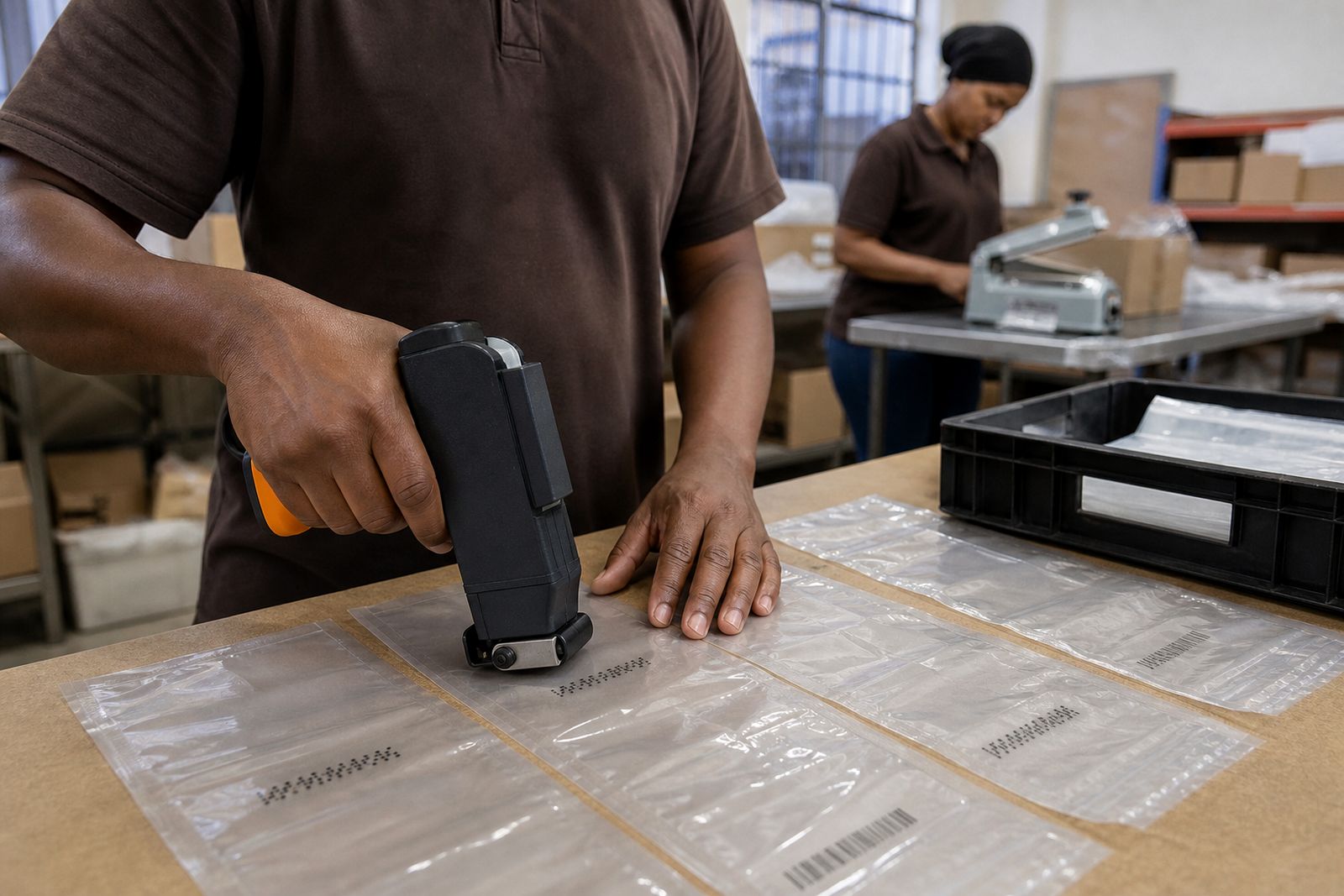
Plastics, bottles and flexible film can take a neat code, but they do not absorb ink the way carton does. On these surfaces, cartridge choice, surface condition and a quick adhesion check matter far more than pushing the coder faster.
Why non-porous packs behave differently
Plastic tubs, shrink film, sachets, coated labels and smooth bottles all share the same challenge: the surface gives the ink nowhere to soak in. The code has to sit on top, spread evenly and dry fast enough to resist handling. That is why quick-dry solvent cartridges are usually the starting point for non-porous work.
In a packing room this shows up very quickly. A code that looks dark and sharp at the point of printing can smear when the operator stacks units too soon, or it can rub off when bottles slide against each other in a crate. Film can be even trickier because it flexes, picks up static and sometimes carries a light treatment or coating that changes how the ink settles.
- Rigid plastics such as HDPE and PP often need a faster-drying ink than carton stock.
- PET bottles can code cleanly, but curved walls make throw distance and angle more important.
- Flexible film can shift during coding, which affects character shape and readability.
- Glossy laminated packs may need an adhesion check even when the code first looks good.
Start with the surface, not only the message
When a customer asks for a batch code on pouches or bottles, the useful question is not only what text must be printed. It is also what the code is landing on. Two plastic packs that look similar from a few metres away can behave very differently once ink touches them. One may take a crisp mark straight away, while the other beads up or drags.
Useful details include whether the pack is PE, PP, PET or a layered film, whether the area is flat or curved, and whether it is handled cold, warm or slightly damp after filling. In Durban humidity and coastal conditions can add another variable, especially where packs move from a chilled line into a warmer room. Condensation on a bottle neck or shoulder can spoil an otherwise suitable code.
- Check if the print area is dry, clean and free of oil, dust or release residue.
- Note whether the substrate is rigid, semi-rigid or flexible.
- Look at the colour and gloss level of the pack before choosing black, white or another ink colour.
- Test on the real production pack, not only on an offcut from a different roll.
Quick-dry ink is usually the right direction
For plastics, film, metalised wraps and glassy bottle surfaces, quick-dry solvent cartridges are generally the safer option. They are made for surfaces where absorbency is low, so they help the code set before the pack is moved, packed or sealed. That does not mean every solvent cartridge suits every job. Some surfaces need stronger adhesion, some need a darker mark, and dark packs may need white or another high-contrast colour.
Large, heavy characters on a very smooth bottle can also behave differently from a small date code on a pouch. More ink on the surface can mean longer drying and a higher chance of scuffing if the line runs tight. Often the best result comes from balancing font height, print density and line speed rather than simply making the code wetter.
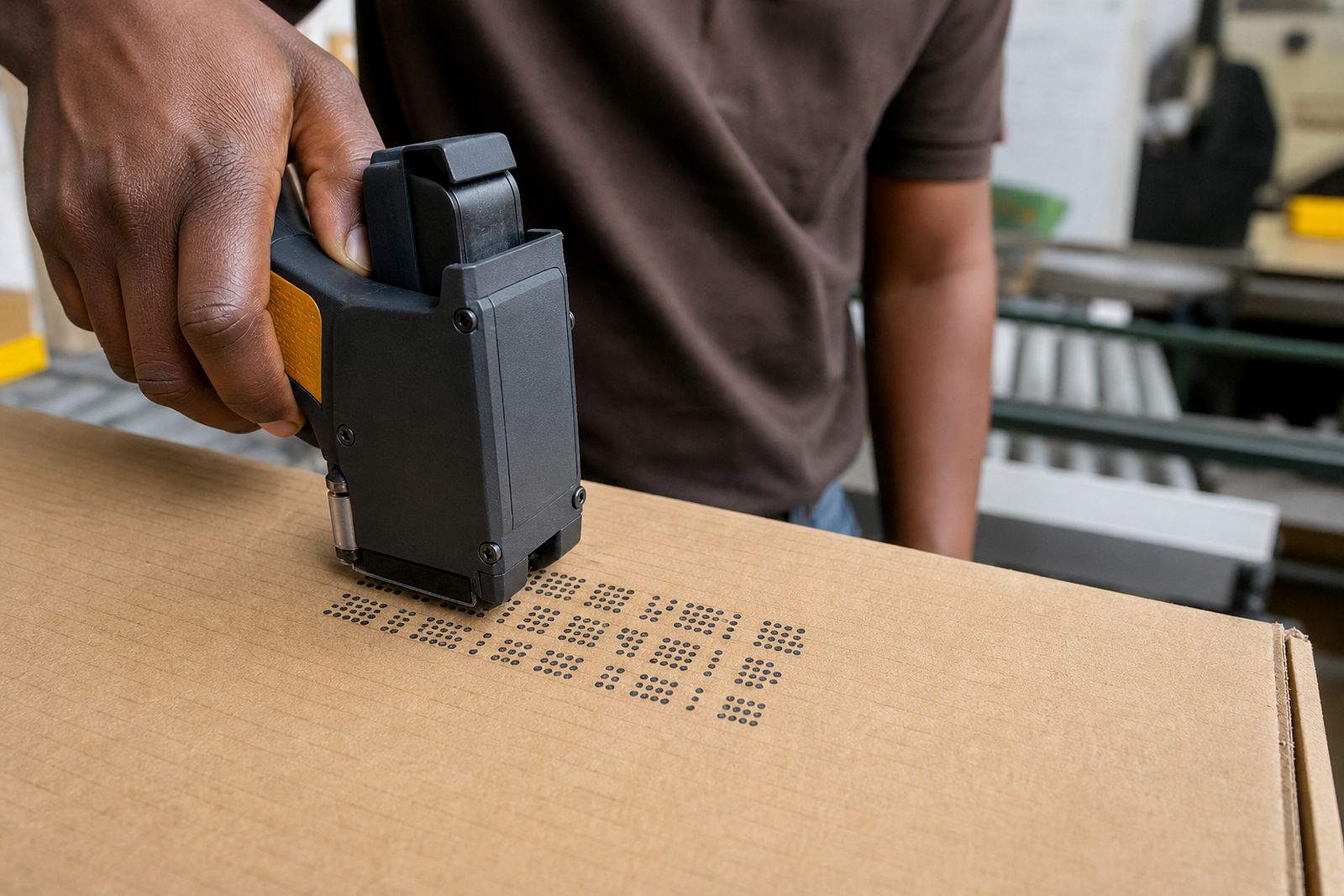
Water-based cartridges still have their place, but mostly on porous materials such as cartons, paper labels and timber. On non-porous plastic they are usually the wrong fit, and a neat code at the start of the shift may not stay neat once handling begins.
A workshop check that saves wasted packs
One food packing team near Pinetown was coding a date and lot number onto plastic tubs before lidding and crating. The first prints looked acceptable, yet the code smeared when staff packed the tubs into outer cases. The issue was not only the cartridge. The print area sat close to a slight mould curve, and the operator was holding the coder at a changing angle as the tubs passed on a small table line.
After changing to a more suitable quick-dry cartridge, the team also moved the print area to a flatter panel and shortened the gap between the printhead and the tub. They then checked a few practical points instead of relying on appearance alone.
- Print several samples from the actual shift run, not a single test piece.
- Leave the code to settle naturally, then rub with firm finger pressure.
- Stack and handle samples the same way the warehouse team will handle them.
- Check readability after the pack has cooled, wrapped or been placed into outers.
- Repeat the check if the film roll, bottle batch or room conditions change.
The result was not dramatic or fancy, just useful. Fewer rubbed codes, less rework and more confidence that the mark would still read at dispatch.
Common reasons codes fail on bottles and film
When codes fade, feather or transfer onto another pack, the cause is often a small setup issue rather than a complete cartridge failure. Non-porous work is less forgiving, so little details matter. A nozzle that needs cleaning, a pack surface carrying moisture, or a print zone placed over a seam can all lead to poor results.
Flexible film brings its own problems. If the web or pouch shifts under the coder, letters can stretch or break. If the film carries static, the ink can behave unevenly. On bottles, the usual trouble spots are shoulders, heavy curves and textured areas where the printhead cannot pass at a steady distance.
- Smudging often points to the wrong ink type, too much ink laid down or handling too soon.
- Patchy print can come from poor nozzle condition or contamination on the substrate.
- Rub-off after packing suggests weak adhesion to the specific plastic or coating.
- Distorted text is often linked to curved surfaces, movement or inconsistent pass speed.
What to send when you need cartridge guidance
If you are trying to code plastic bottles, pouches, sleeves or film wrap, a few clear details help us point you to the right cartridge type. We match cartridges to handheld coders and surfaces, and we can courier nationwide from the Durban side through to factories, packhouses and warehouses in every province.
Send the substrate type if you know it, the colour of the pack, the code size you want and whether the printed area is flat, curved or flexible. A photo of the exact print position helps too, especially on bottles where a small shoulder curve can change the outcome. If there has already been smudging or fading, mention when it happens: straight after coding, during sealing, in the cold room or in transport. That usually tells us more than a broad note saying the ink does not work.
For product matching or ordering, use our contact form.
What our Coding Ink customers say
Verified Google reviews
Questions we get asked
Can I use the same cartridge on cartons and plastic bottles?
Usually not. Cartons and paper are porous, while plastic bottles are non-porous. A water-based cartridge that works well on a carton case will often smear or rub off on smooth plastic, so bottles normally need a quick-dry solvent option.
Why does the code look fine at first but rub off later?
That often points to poor adhesion on the actual substrate, moisture on the pack, too much ink laid down, or handling before the code has settled properly. It can also happen when the print area sits on a curve, seam or glossy coating that does not suit the cartridge.
Do you supply handheld coders or repair them?
No. We supply inks and cartridges for handheld inkjet coders, help with cartridge and surface matching, and advise on storage and nozzle care. We do not sell the coders themselves, repair them or print products for clients.

Tell us about the job
Send sizes, materials and where you are through our contact form, and we will come back with the practical options.
Open the contact form